



Download PitchBook’s Report here.
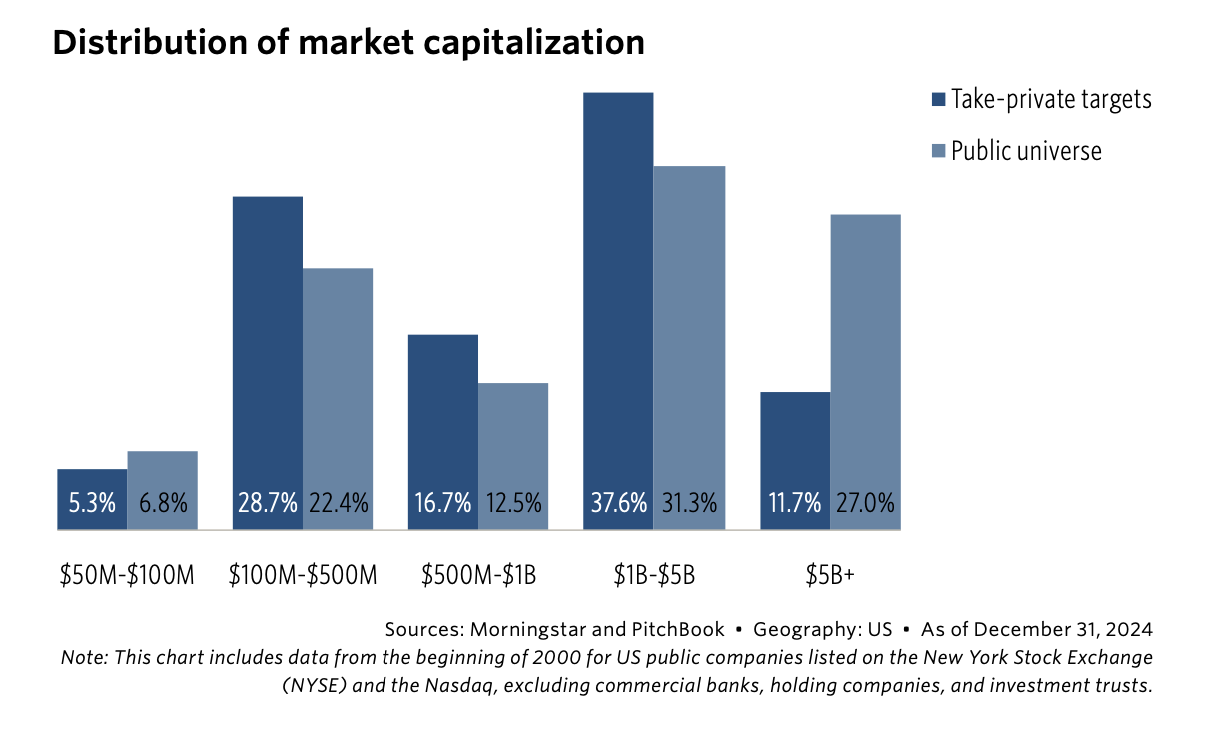
Since the inception of the buyout strategy in the 1980s, buyout managers have maintained a core playbook: At a reasonable price, invest in relatively small, underperforming companies that still generate enough free cash flow (FCF) to service an increased debt burden. Evidence from take-private transactions over the past 30 years confirms this playbook is being used. We found that take-private targets are more likely to be relatively cheap with respect to a variety of equity price ratios despite relatively neutral EBITDA and cash flow margins. Underperformance is apparent in both the trailing one-year stock return of these take-private targets as well as their operating efficiency in terms of revenue generated per employee.
(Past performance is no guarantee of future results.)

Latest news

US Leveraged Loans Return 3.36% to Investors YTD
The Bloomberg US Leveraged Loan Index (Ticker: LOAN) returned 0.96% in August and has gained an additional 0.28% through September…

PE dry powder
The capital that is being raised is flowing overwhelmingly to the largest, most established managers.

Middle market debt held by BDCs vs High yield vs Treasury yields
The blue line represents the current dividend yield of the VanEck BDC Income ETF (BIZD), which stood at 11.7% as…