
News reached us last week that a computer discovered the largest prime number known to exist. A “non-descript desktop” PC in Room 143 at the University of Central Missouri worked for 31 days before locating the 22 million digit numeral. The super calculator, known on campus as “No. 5,” was unavailable for comment.
Big numbers are also making news in the leveraged loan market. Thanks to regulatory headwinds and turmoil in the public markets, private equity sponsors are being challenged to round up sufficient debt capital for any financings over $500 million.
A case in point is KKR’s LBO of Mills Fleet Farm. In a normal market any deal of size for one of the world’s premier buyout shops would be catnip to institutional investors. But that was before the recent onset of volatility and leveraged lending guidance.
Bank capacity for broadly syndicated transactions has shrunk dramatically. According to press reports, the sponsor cobbled together its own financing package via relationship accounts and its own debt capital markets desk.
Most large PE firms have some ability to underwrite and distribute senior and junior debt, but are often restricted from doing so for their own buyouts. Or they partner with other lenders, particularly on financings of size.
Beyond bank regulation, senior debt capacity is hampered by risk retention rules for CLO managers. Still the largest holders of leveraged loans, CLO formation has slowed to a crawl. According to S&P LCD, there’s only been $800 million in new vehicles in January. That compares to $5.5 billion last January – the second worst month ever.
Also faring badly have been BDCs. As a class, these public companies are trading significantly below book value (see Chart of the Week). That means many can’t issue stock without shareholder consent, so are restricted to recycling cash for new investments. The result has been a noticeable hole in second lien appetite.
All these factors have combined to provide an opening for private credit. In particular, middle market asset managers with long-term capital have increased their penetration of both direct lending and leading increasingly large transactions. One sponsor told us, “For years we did 90% of deals with banks. That’s all changed.”
Another PE partner agreed. “Six months ago I never had even heard of them,” referring to one leading mid cap arranger. “Today I’m working on three things with them.”
We wrap up our series next week with predictions on major trends to look for in 2016.


Latest news
Top 50 BDCs Accounted for 75% of Nonaccrual Loan Cost in Q2’26
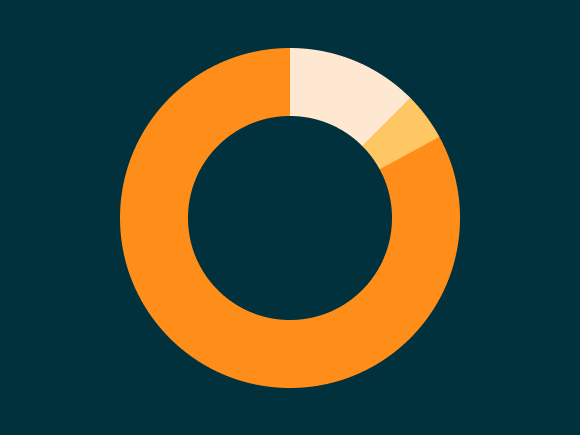
The 50 largest BDCs, on the basis of total debt investments as of the second quarter of 2026, accounted for 75% of the total aggregate reported value of nonaccrual debt at cost and fair value.

US private debt AUM ($B) by channel
In 2025 and the early part of 2026, the retail channel added AUM to the asset class at a much faster rate than institutional investors in both regions, with growth rates of 43.7% globally, 41.4% in the US, and 73. 1% in Europe through the beginning of 2026 compared with year-end 2024 figures.