



“People are still standing.” So a friend of ours characterized the broadly syndicated loan market at the close of a bumpy 2015. From his perch at a big bank trading desk, he put a good face on investor appetite. “There are still bids,” he told us.
Another large cap sales pro agreed. “Investors are putting money to work,” he said. “They are constructive at a price.”
These sentiments reflect modest optimism among the liquid loan crowd that 2016 will begin in better shape than the battered public equity and debt markets. Credit appetite and liquidity, particularly for well-favored sectors and issuers, should allow reasonably priced and structured deals to get done.
As always happens, market volatility has highlighted the difference between the world of larger, rated borrowers, and the middle market.
Think of the broadly syndicated market as an “open” system where demand is governed by fund flows and CLO capacity. This is cash coming from outside the circle of intermediaries that distribute (but do not hold) loans. Whether from retail funds or structured finance buyers, this capital is subject to investor whims and market turmoil.
Investor sentiment was not exactly robust last year. In the latter half alone, $12.5 billion (per Lipper) exited loan accounts; a total of $16.5 billion for all of 2015.
Also, as our Chart of the Week shows, CLO formation was hampered by worries that risk retention rules would restrict new vehicles to all but the largest asset managers.
By comparison, the middle market is more of a “closed” system. Appetite for smaller, unrated credits is a function of how much capital the discrete club of middle market firms has to deploy. Market capacity is measured by the dollars those managers have raised, whether in credit funds or managed accounts. That helps explain why mid cap prices and spreads are somewhat insulated to the vicissitudes of the broader markets.
The flow-driven business swings with investors’ views of relative-value: should I buy loans or bonds? Experienced middle market buyers don’t toggle among other credit menu choices. Origination is a buy-and-hold strategy based on relationships with sponsors built up over years.
As volatility impacts the large cap arena during 2016, we expect the middle market to benefit from tighter structures, better terms, and a continued illiquidity premium.
Next week, we continue our series with a prediction of middle market pricing and leverage for 2016.


Latest news

PIK Your Next Adventure
Every amended PIK loan hits the same crossroad. Not everyone ends up at the same destination.
Top 50 BDCs Accounted for 75% of Nonaccrual Loan Cost in Q2’26
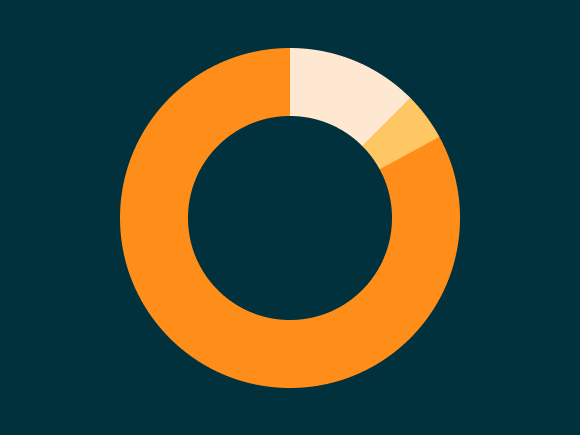
The 50 largest BDCs, on the basis of total debt investments as of the second quarter of 2026, accounted for 75% of the total aggregate reported value of nonaccrual debt at cost and fair value.
Private Credit Defaults 101: Beyond the Noise
Like any good school year, this series went by fast. But unlike the end of the year, we’re not out for the summer.