



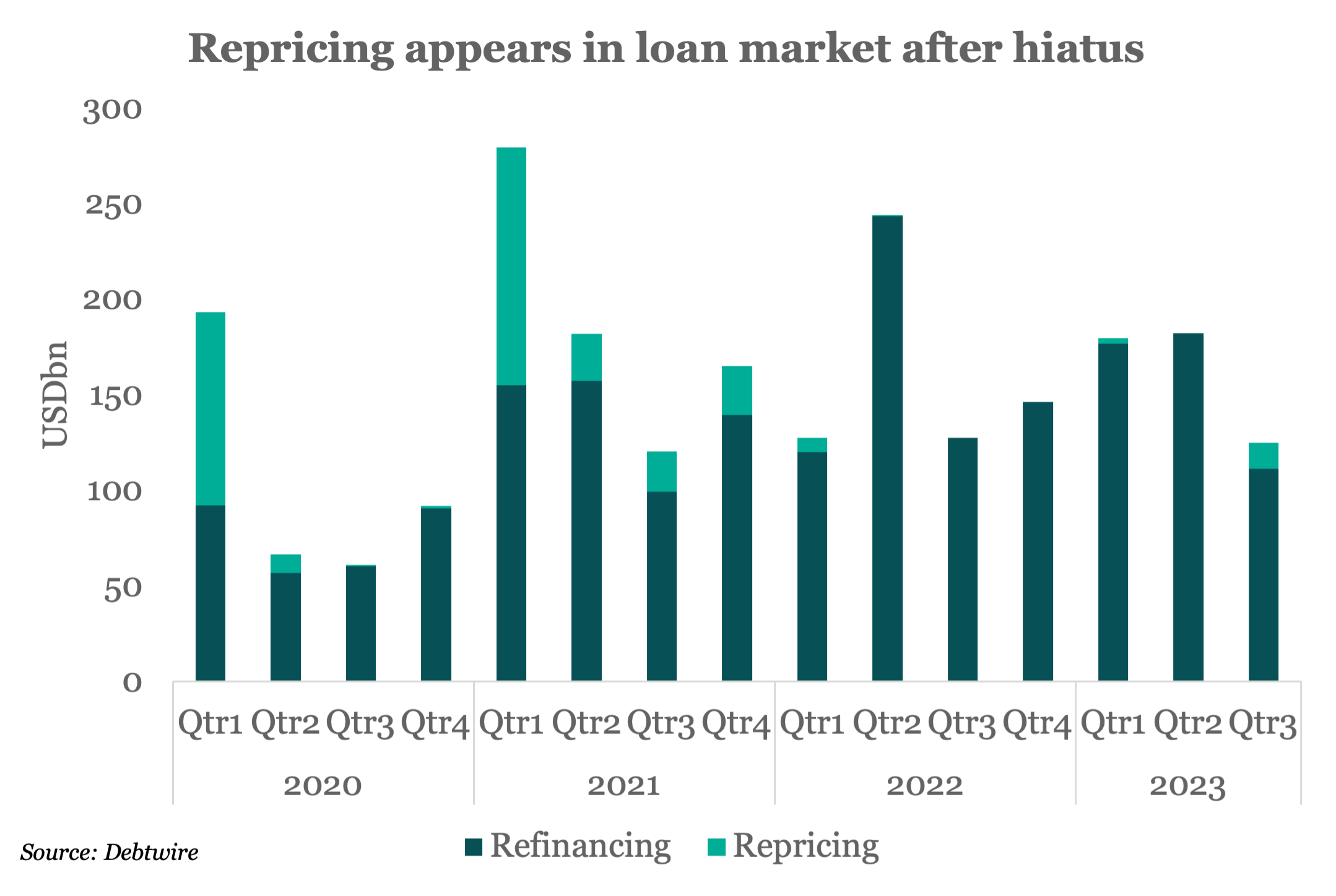
Repricings tick upward in opportune window
An upturn in repricing transactions has been seen in the leveraged loan market over the past two months, as tightening margins have afforded issuers the ability to refresh existing deals at lower interest rates.
The reasons behind the rise in repricing as a means of replacing existing debt could result from two states of the market. The first is a fundamental view that positive macroeconomic expectations for the future are serving to drive down current yields. The second is a technical perspective in which the interplay between an upcoming economic slowdown causing low M&A activity – and therefore low supply of new loans – amid a period of strong CLO issuance manifests in higher demand. The result of either of these scenarios is margin compression for leveraged loans.
While the former paints a far more hopeful future, and several indicators suggest an improvement in the macroeconomic outlook compared with previous expectations, there appears to be overwhelming evidence that a temporary technical tailwind is the basis for the current emergence of repricing activity.
One day at a time
Looking at leveraged loan default expectations from Fitch Ratings, the expected total default volume has been reduced to 3-3.5% of the outstanding universe, a downward revision from the anticipated 4-4.5% earlier in the year, which is a positive sign for the near future. However, the 2024 forecast is left unchanged at 3.5-4.5%.
On the demand side, it is a similar picture. The short-term view for US CLOs is robust, with volumes down only 20% on last year compared with a 56% shortfall in new-money institutional facilities over the same period. However, a longer-term view shows that a high proportion of US CLOs are set to end their reinvestment period over the next 12-18 months because of a lack of reset and refinancing activity during the past two years, which would significantly impact demand for loans.
A further point likely to weigh on sentiment is the anticipated interest-rate rise at the next Federal Open Market Committee meeting, along with recent signalling from the Fed in August on its commitment to higher-for-longer rates. In addition, the effects of monetary policy continue to filter their way through every market.
The acceleration in restructuring activity, expected rise in defaults, expiring CLO reinvestment periods, anticipated central bank rate rises, ongoing effect of monetary policy, and continuation of the 3m10y marker all point to a worsening outlook for the leveraged loan market.
While this prognosis appears dour, the current conditions as they are present an opportunity for relatively tight pricing. If now is the eye of the storm, then any eligible issuers should be rushing to the market before the end of the year to reprice their eligible debt.
(Past performance is no guarantee of future results.)



Latest news

European mid-market direct lending margins face steady compression since 2024
European mid-market direct lending margins have seen consistent compression over recent years but recorded a slight increase in the second quarter of 2026…

US leveraged loan issuance rebounds in September
Following three consecutive months of declining issuance, the US leveraged loan market has reversed course in September. Approximately $48.7b of…

Reversion to the Mean
Climbing toward the average is a very different story than surpassing it.