
Our thoughts are with our friends in Paris this week, as events prove again our world can be a troubling and unpredictable place.
We mark the fourth quarter’s midway point with a brief review of what we are seeing from our private equity clients and key middle market lender relationships.
Let’s start with deal volume. Despite data suggesting somewhat slower transaction activity relative to earlier this year and 2014, our platform has seen a steady flow of both buyout, recap, and refinancing loans. This seems unrelated to any year-end deadlines, but rather the natural evolution of sponsors and lenders putting money to work.
The overhang of uncommitted LP capital remains over $500 billion from both newly raised and earlier vintage funds. The fundraising environment is also propitious for private credit, and financing is relatively cheap and available, with some exceptions.
Loan terms continue to be sell-side friendly, particularly for repeat issuers and larger ebitda companies. While August’s market volatility served as a brush-back pitch for covenant-lite in the middle market, debt baskets, covenant cushions, and “adjusted ebitda” definitions reflect continued aggressiveness by debt arrangers and sponsors.
As we covered at length in our recently concluded series on unitranche financings [link], this one-stop credit solution has firmly taken hold across the middle market. A growing number of credit providers are offering both single and bifurcated tranches, encompassing various options including ABL revolving credits and mezzanine.
As our Chart of the Week shows, leverage has risen, particularly among non-bank lenders. Four times senior and six times total is the new 3.5x/5x. Indeed, the better credits are now bumping up to seven times total leverage.
But in large part this is because purchase price multiples are expanding as well. This is increasingly true of smaller middle market borrowers (below $25 million ebitda) where double-digit multiples are increasing. Sponsors, though, are maintaining equity-to-capital ratios at levels comfortably over 40% – a far cry from the toppy days of 2007.
Thanks to a combination of factors, including regulatory pressures that continue to push banks to the sidelines for highly leveraged transactions, loans spreads have widened 25-50 bps for first-lien debt, and even more for second lien tranches. Loans that launched last summer at L+425-450 bps would now be in the 450-475 range. Story credits (“issuers with issues”) need at least L+550-650 to get investor attention.
Besides the aggressiveness of competitive bids in auction, an on-going frustration expressed by PE firms is the increased velocity of sale processes. Due diligence that formerly took months has been compressed to weeks. In such rushed timetables, partners fret, it’s increasingly difficult to fully vet the tough business issues.
“There’s no way some of these firms can really know what they’re getting,” one partner told us. “They’re taking properties off the market just to figure out what they bought.”


Latest news
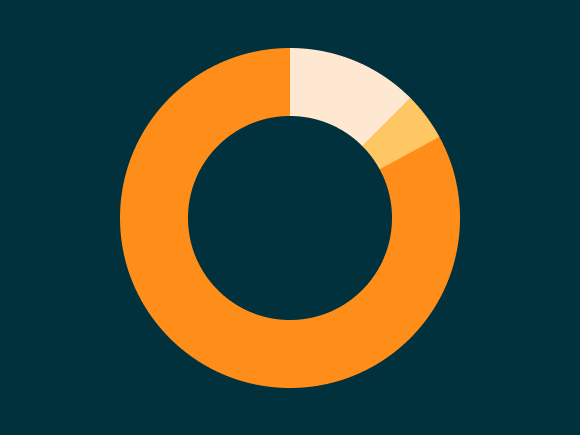
Top 50 BDCs Accounted for 75% of Nonaccrual Loan Cost in Q2’26
The 50 largest BDCs, on the basis of total debt investments as of the second quarter of 2026, accounted for 75% of the total aggregate reported value of nonaccrual debt at cost and fair value.

US private debt AUM ($B) by channel
In 2025 and the early part of 2026, the retail channel added AUM to the asset class at a much faster rate than institutional investors in both regions, with growth rates of 43.7% globally, 41.4% in the US, and 73. 1% in Europe through the beginning of 2026 compared with year-end 2024 figures.