After our stop in Stockholm last month to visit investor clients with our Nuveen and Arcmont colleagues (and after our scheduled meetings in Finland were postponed by a baggage handlers’ strike at Helsinki-Vantaa airport), we gathered at Copenhagen’s Hotel d’Angleterre for an event showcasing alternative strategies.
The Nordics share several similarities – the “Nordic model” – including high standards of living, free-market economies, liberal welfare states, and a relatively narrow gap between low and high earners. We also noted (after our Finnish experience) a strong union trend.
One of our senior strategists further commented on a common belief system around environment, society, and governance. “What stood out in my mind after our trip,” he told us, “was the degree to which they talk the talk, but also walk the walk, on ESG. Both in how they invest, and how they live.” A lot of bike-friendly commuting lanes, as one prime example.
There are differences in the economics of the Nordic countries. Denmark is very much tied to science, technology, energy, and transportation while Sweden and Norway have enjoyed historic access to natural resources (the latter’s massive petroleum reserves and the former’s timber and iron ore). Denmark is a flat country with no such significant assets.
Currency-wise the krone is pegged to the Euro, stemming back to the government’s decision in 1982 to tie its currency to the DEM. This is also one reason why the DKK is less volatile than the NOK and SEK with the latter free-floating, and why Denmark has coped better with inflation.
Danish GDP has benefitted enormously from the growth of Novo Nordisk, maker of top-seller obesity and diabetes drugs, Ozempic and Wegovy (see our Chart of the Week). Without it, the first half of 2023 would have been negative rather than a positive 1.7%. But Denmark also has a strong shipping tradition (e.g. DSV and Maersk). It was also one of the founders in the 1970s of the modern wind power industry with the serial production of wind turbines by Tvindkraft.
Considered among the world’s best, the Danish pension system has a state-funded component, supplemented by ATP, paid by a small, fixed paycheck contribution. There are also commercial funds providing services to corporations with less union influence and attention to costs and returns in competitive environments. Occupational pension funds, on the other hand, are driven by strong unions with traditional labor values. Then there are voluntary private pensions.
As with our Swedish clients, the Danes are highly attuned to the recent run-up in yields for private credit. It’s also helpful that structures and leverage have tightened. As more fixed-income-oriented investors, they understand the advantage of a floating rate asset class. Now it’s all about ensuring their managers have built portfolios that will weather whatever headwinds are in store for the rest of this year, and beyond.

Latest news
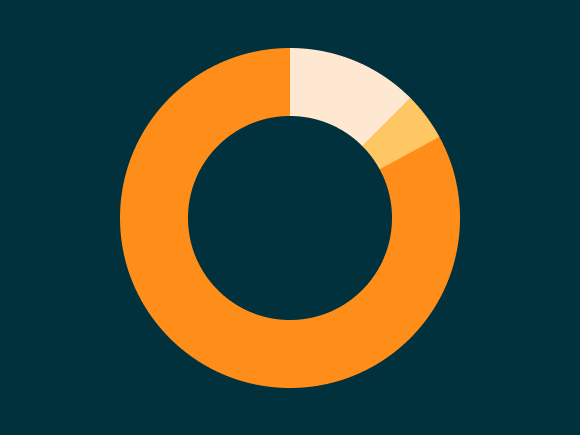
Top 50 BDCs Accounted for 75% of Nonaccrual Loan Cost in Q2’26
The 50 largest BDCs, on the basis of total debt investments as of the second quarter of 2026, accounted for 75% of the total aggregate reported value of nonaccrual debt at cost and fair value.
US private debt AUM ($B) by channel
In 2025 and the early part of 2026, the retail channel added AUM to the asset class at a much faster rate than institutional investors in both regions, with growth rates of 43.7% globally, 41.4% in the US, and 73. 1% in Europe through the beginning of 2026 compared with year-end 2024 figures.