



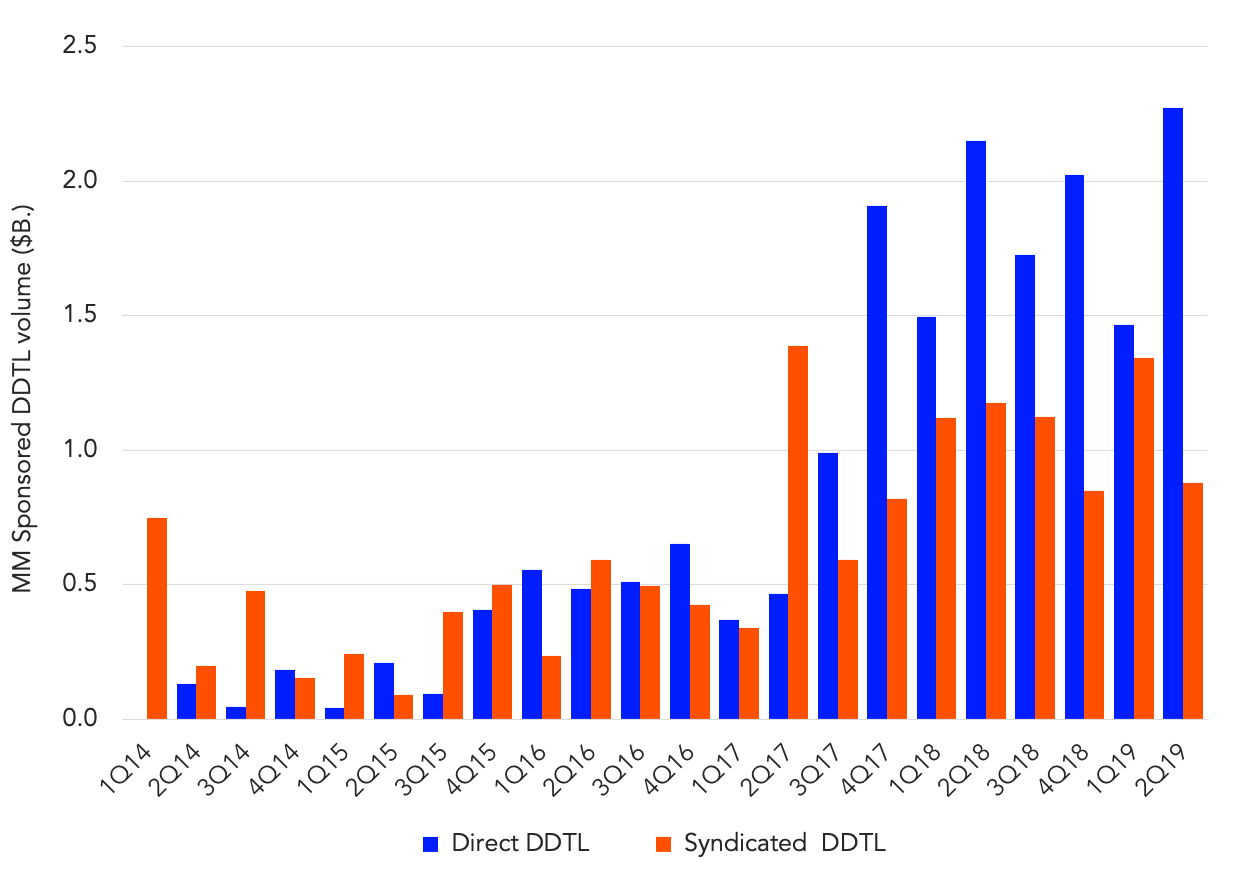
Over the last few years, sponsors have been ramping up the amount of delay draw term loans within their middle market M&A transactions. In 2Q19, LPC tracked US$3.1bn in delay draw term loan volume within middle market sponsored finance which is the second highest quarter tracked by LPC behind the US$3.3bn tracked in 2Q18. With purchase price multiples at such elevated levels, sponsors are relying on buy-and-build strategies to justify paying up and to help blend multiples down through scale. Given this popular strategy, sponsors are asking for more delay draw term loans within the initial LBO deals to give them firepower for add-ons at a later time. And direct lenders are using this to their advantage to win deals over the syndicated market. While direct lenders cannot always offer large revolvers as it causes a drag on their returns, they are more inclined to offer delay draw term loans to help keep relationships with sponsors strong and guarantee they will come back to the incumbent lender with their add-on deals at a future date. “We continue to live off of our portfolio in a slower new issue market, the prevalence of the delay draw term loan is so important to sponsors so they can more easily execute on their add-on strategies – it continues to bring them back to us and it also brings scale and diversification to our portfolio companies,” said a direct lender. The theme of increased delay draw term loans is present in both the syndicated and direct lending market, however direct lending delay draw term loan issuance has outpaced syndicated DDTL issuance for the past eight quarters.
Contact: Fran Beyers
frances.beyers@thomsonreuters.com


Latest news

US Leveraged Loans Return 3.36% to Investors YTD
The Bloomberg US Leveraged Loan Index (Ticker: LOAN) returned 0.96% in August and has gained an additional 0.28% through September…

PE dry powder
The capital that is being raised is flowing overwhelmingly to the largest, most established managers.

Middle market debt held by BDCs vs High yield vs Treasury yields
The blue line represents the current dividend yield of the VanEck BDC Income ETF (BIZD), which stood at 11.7% as…