



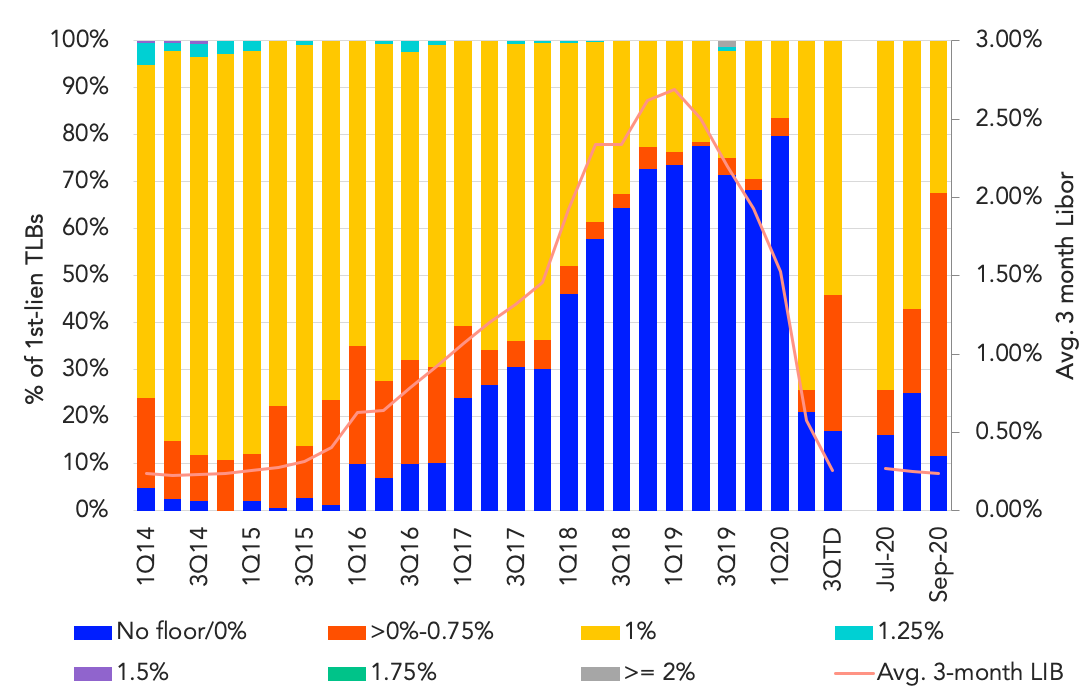
One of the many effects brought by the pandemic was the precipitous drop in Libor rates, which had already been in a steady decline for a while. The average 3-month Libor rate dropped almost 100bp to an average of 0.58% in 2Q20 and is at an average of 0.26% this quarter. As a result, Libor floors made a reappearance and there was a complete shift in the market. In 1Q20, a whopping 80% of first-lien institutional tranches had a 0% or no floor. By the second quarter, 74% of first-lien term institutional term loans had a 1% floor. And while the majority of deals in the institutional market still have a Libor floor, there has been a shift towards lower floors this quarter. In July, 74% of deals had a 1% floor. The share is down to 32% so far in September. As investors look to put money to work amid very limited supply of new deals, healthier issuers are taking advantage to bring opportunistic deals to market, and pricing, including Libor floors is tightening. Still, the majority of deals that have hit the market in September have a floor, with 56% of them offering a 0.5% or 0.75% floor.



Latest news
Q2'26 BDC analysis shows additional 184 bps of nonaccruals at cost
In a universe of 173 business development companies, or BDCs, Octus identified a total of $9.5 billion of debt (at cost) in nonaccrual status reported in the second quarter of 2026, a slight decline of 5% from $10 billion in the first quarter of 2026.

Reading the Board
The story changes depending on which numbers you’re counting.
Private Credit Defaults 101: Different Numbers, Different Stories
In Season 2 of Billions, Bobby Axelrod takes his lawyer Orrin Bach to an empty Yonkers racetrack in the dead of night.