Markit Recap


At the end of January, it seemed unlikely that the first-quarter of 2014 would be a positive one for credit markets. But that is exactly what happened, and central banks in the US and Europe appear to be laying the groundwork for a strong Q2.
The Markit iTraxx Europe Series 20 started the year at 70bps; by the end of the quarter the on-the-run index was trading at 76bps. However, accounting for the roll on March 20, the index was slightly tighter over the quarter. It was a similar story with the Markit CDX.NA.IG.
On the face of it, this may not look like an impressive performance, particularly in comparison to Q4 2013. But when the emerging market turmoil earlier this year – and the concomitant volatility in developed markets – is taken into account, it is clear that credit markets finished the quarter in a bullish mood.
Nowhere was this more evident than in high-yield. The Markit iTraxx Crossover index was trading at 286bps on March 31, exactly the same level as where it started the year. But the roll effect added over 60bps to the on-the-run index, so the underlying trend was a rallying market.
Sub-investment grade debt is benefiting from advantageous global monetary conditions, as well as the conspicuous lack of contagion from emerging markets. Federal Reserve Chair Janet Yellen has reassured investors that interest rates will stay low “for some time”, and the idea of QE tapering no longer triggers panic.
The ECB has resisted the calls to implement QE in the eurozone since the start of the financial crisis. However, that may be about the change. Mario Draghi, the president of the ECB, signalled that the central bank is ready to use “unconventional instruments” to head off the threat of deflation. He confirmed that the policy toolkit includes QE.
We know from recent experience that QE acts as a boon for risk assets, and generates demand for higher yielding securities. If implemented this year, the timing would be opportune with the Fed scaling back its bond purchase programme.
But the ECB is renowned for its hawkish approach to monetary policy, and it is by no means certain that it will follow its words with action. The Bundesbank is known to be strongly against QE, and it is likely that the ECB will take alternative measures before crossing the QE rubicon.
Contact: Gavan Nolan


Latest news
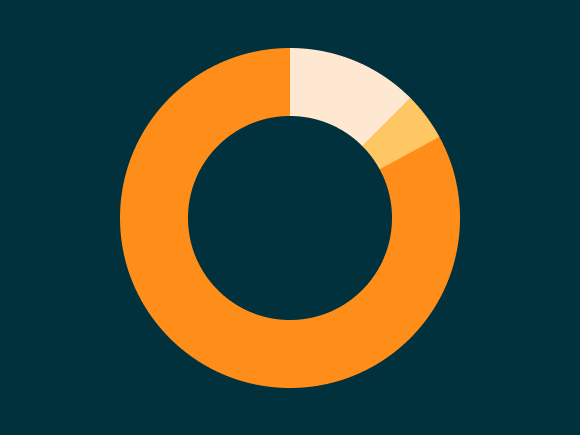
Top 50 BDCs Accounted for 75% of Nonaccrual Loan Cost in Q2’26
The 50 largest BDCs, on the basis of total debt investments as of the second quarter of 2026, accounted for 75% of the total aggregate reported value of nonaccrual debt at cost and fair value.

US private debt AUM ($B) by channel
In 2025 and the early part of 2026, the retail channel added AUM to the asset class at a much faster rate than institutional investors in both regions, with growth rates of 43.7% globally, 41.4% in the US, and 73. 1% in Europe through the beginning of 2026 compared with year-end 2024 figures.