
For those of us who have made the middle market our livelihood for a while, last week’s Wells Fargo 2016 Middle Market Opportunities Forum was an extraordinary event. To see the likes of Steve Schwartzman, Lloyd Blankfein, Leon Black, and (in a lunch keynote) Michael Milken, at a conference dedicated to the virtues of private credit, was to witness how far this increasingly public asset class has come.
Presided over masterfully by the BDC virtuoso, Jonathan Bock, the two-day NYC symposium also included panels populated by leading midcap firms such as Golub, Antares, and Ares, as well as global asset managers TIAA, T. Rowe Price, and Fidelity. Speakers covered topics such as asset allocation models, returns, credit risk/reward, fees, and private equity strategies.
One of the themes that came through loud and clear was that, given today’s low-rate environment, investing in alternatives is critical to achieving high single-digit returns to meet client demands. Private credit, as a key arrow in the alts quiver, has garnered attention thanks to its steady performance through the downturn, and its relative lack of volatility compared with more correlated assets.
One of our favorite observations came from one leading middle market arranger, who took on the question of “overheating in the middle market.” His view, which we have been stating for a while now, is that the midcap market is growing and maturing, not overheating. Yes, there are more dollars coming into the space – $37 billion this year (according to Thomson Reuters LPC), versus $24 billion last year. But that’s dwarfed by an estimated $200-$300 billion per year of potential supply of middle market loans from new private equity dry powder and refinancings from existing deals (the “refi cliff”).
He also said that middle market syndicated loan volume being down this year was not reflective of less deal activity, but of a growing trend towards “buy-and-bigger-hold” execution among a small group of club lenders.
Panelists also spoke about the relative value afforded by middle market loans. Today this asset class – up and down the debt structure – is generating over a 800 bps premium to Libor compared to about 400bps over ten years ago.
On the general economic environment, it was felt that policies from the new administration would likely 1) extend the business cycle, and 2) accelerate growth. Conversely, with commodity prices at historic lows, there would be margin pressures on businesses. Also, while defaults have been sector-driven, macro signs point to a potential increase in defaults, potentially in 2019.
On the notion of possible deregulation, panelists were skeptical that Congress would be sympathetic to big banks. Any easing of Dodd-Frank, it was felt, would be to allow smaller banks to expand small and individual business lending; less on loosening capital requirements related to Basel III.
Finally, there was healthy debate about whether some issuers were pushing leverage and structures too far. While that may be the case, the words of one veteran portfolio manager came to mind: “The middle market has always wanted to be a grown-up asset class. Congratulations. We are.”


Latest news
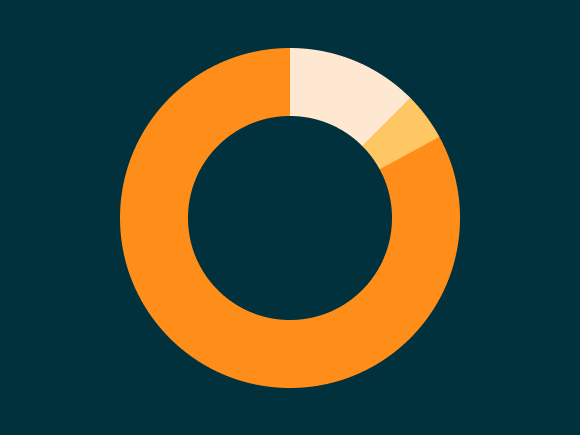
Top 50 BDCs Accounted for 75% of Nonaccrual Loan Cost in Q2’26
The 50 largest BDCs, on the basis of total debt investments as of the second quarter of 2026, accounted for 75% of the total aggregate reported value of nonaccrual debt at cost and fair value.

US private debt AUM ($B) by channel
In 2025 and the early part of 2026, the retail channel added AUM to the asset class at a much faster rate than institutional investors in both regions, with growth rates of 43.7% globally, 41.4% in the US, and 73. 1% in Europe through the beginning of 2026 compared with year-end 2024 figures.