



Click here to learn more.
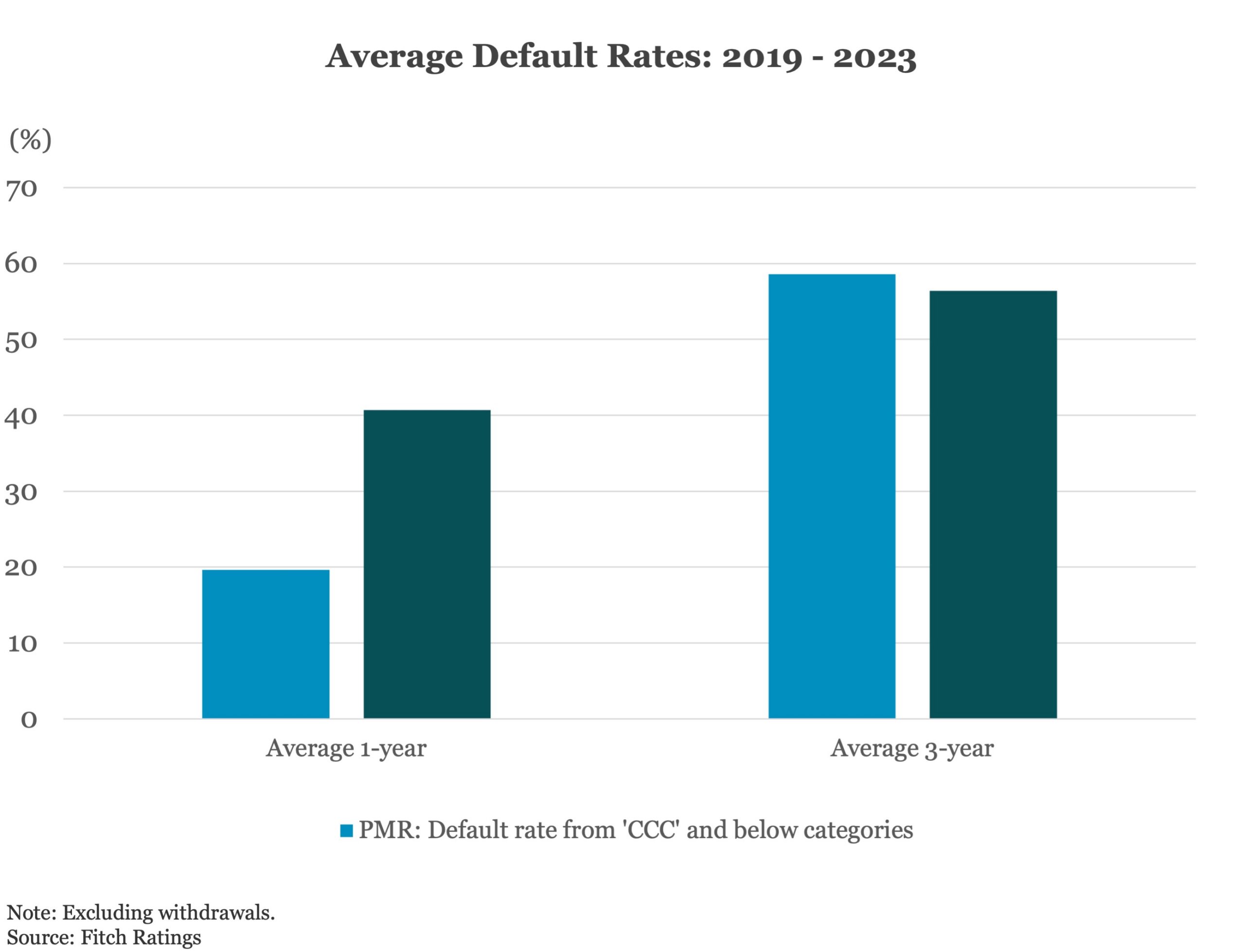
PMR issuers within the ‘CCC’ category have a lower average annual upgrade rate, lower average annual default rate and a higher average annual stability rate than publicly rated peers. Different stakeholder dynamics within the direct lending segment play a role in the lower number of defaults within the PMR portfolio.
Within the PMR portfolio, which is largely composed of loans made by direct lenders to sponsor-owned companies, sponsors typically work with lenders to support issuers as needed. On the sponsor side, this could come in the form of liquidity support such as equity injections, incremental shareholder pay-in-kind (PIK) loans or sponsor guarantees. Lenders may also offer other support, such as deferring or capitalizing interest payments, or granting covenant waivers and resets.
While the sponsor or lender partnership inherent in direct lending appears effective at moderating defaults in the short term, the benefit over the longer term is less clear.
For example, the average annual one-year default rate (excluding withdrawals) for issuers entering the year in the ‘CCC’ category or below is lower for PMRs at 20% compared to 41% for publicly rated companies. On a three-year basis, however, this relationship flips with 59% of ‘CCC’ and below rated PMRs defaulting over that time period compared to 56% of public ratings.


Latest news

The Recovery Shot
Trouble off the tee doesn’t always translate to trouble on the scorecard.
Q2'26 BDC analysis shows additional 184 bps of nonaccruals at cost
In a universe of 173 business development companies, or BDCs, Octus identified a total of $9.5 billion of debt (at cost) in nonaccrual status reported in the second quarter of 2026, a slight decline of 5% from $10 billion in the first quarter of 2026.
Private Credit Defaults 101: Scrambling for Par
Seve Ballesteros won four majors in the 1980s despite being, by his own admission, one of the wildest drivers of the golf ball on tour.