



Investors still say there are factors hindering them from participating in co-investment opportunities.
Limited partner appetite for co-investment opportunities has dropped to a three-year low as credit investors hold back from doubling up with fund managers.
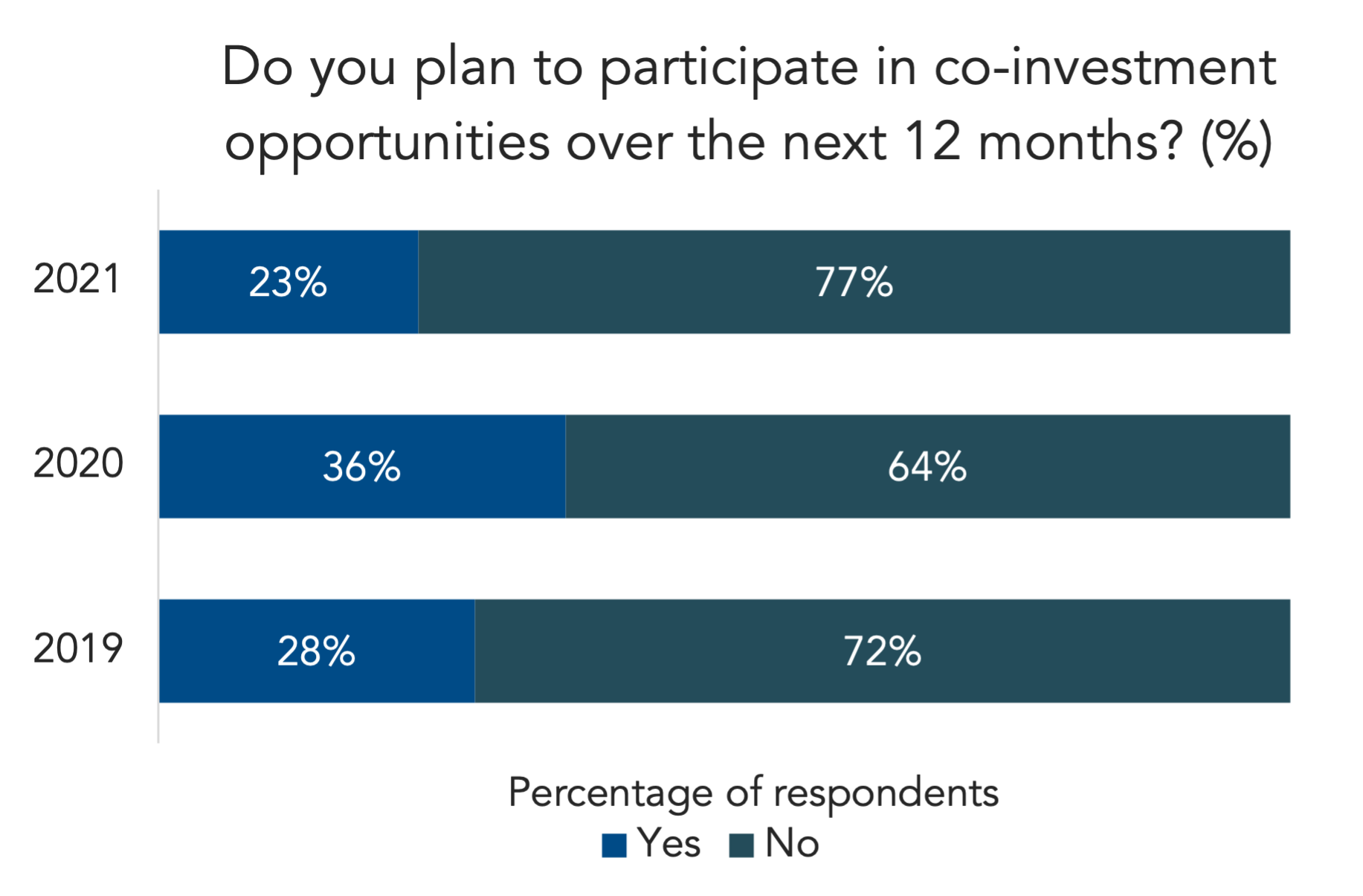
According to Private Debt Investor’s LP Perspectives 2021 Study, fewer than one in four LPs expect to participate in co-investment opportunities over the next 12 months, a figure that is down significantly on this time a year ago and stands in stark contrast to the views of private equity investors.
At the start of 2020, co-investments seemed to be emerging as an increasingly popular method for investors to reduce fees and maximise returns, with 36 percent of LPs at that time expecting to participate in deals alongside familiar managers during the year.
But while such opportunities may offer fee savings, in addition to the chance to double-up on their favourite managers, sectors and geographies, some of the shine has gone off co-investments in the credit sphere during the pandemic. Today, just 23 percent of LPs expect to participate in co-investments in private debt, compared with 71 percent who expect to do so in private equity.
Some say there may be a lack of available co-investment opportunities constraining supply, as private equity sponsors reserve for their own co-investors in certain parts of the capital stack.
But co-investment can also fall into the category of “easier said than done”. The most commonly cited inhibitors to co-investment include insufficient staffing and challenges in reaching the required transaction speed.
When asked what puts them off co-investing, one in four LPs say they lack enough staff, while 34 percent say they are put off by the haste required to conclude transactions.
“Competition for the best opportunities and the ability to execute in a reasonable timeframe continue to be the major obstacles,” says Andrew Beaton, senior managing director on the co-investment team at Capital Dynamics. “Some investors also lack the investment experience and expertise to tackle co-investment.”
Meanwhile, co-investment can also lead to potentially troublesome concentration issues. “Co-investments are, by nature, concentrated bets into single companies,” says Mikael Huldt, head of alternative investments at AFA Insurance.
(This is taken from an original article written by freelance journalist Claire Coe Smith for PDI)



Latest news
US Leveraged Loans Return 3.36% to Investors YTD
The Bloomberg US Leveraged Loan Index (Ticker: LOAN) returned 0.96% in August and has gained an additional 0.28% through September…

PE dry powder
The capital that is being raised is flowing overwhelmingly to the largest, most established managers.

Middle market debt held by BDCs vs High yield vs Treasury yields
The blue line represents the current dividend yield of the VanEck BDC Income ETF (BIZD), which stood at 11.7% as…