



Cov-lite, cov-wide or cov-regular, credit managers are making the bed they’ll have to lie in.
The private debt deal market is red hot: there is cash aplenty, more lenders than there are deals, egregious EBITDA addbacks – and investors are taking note.
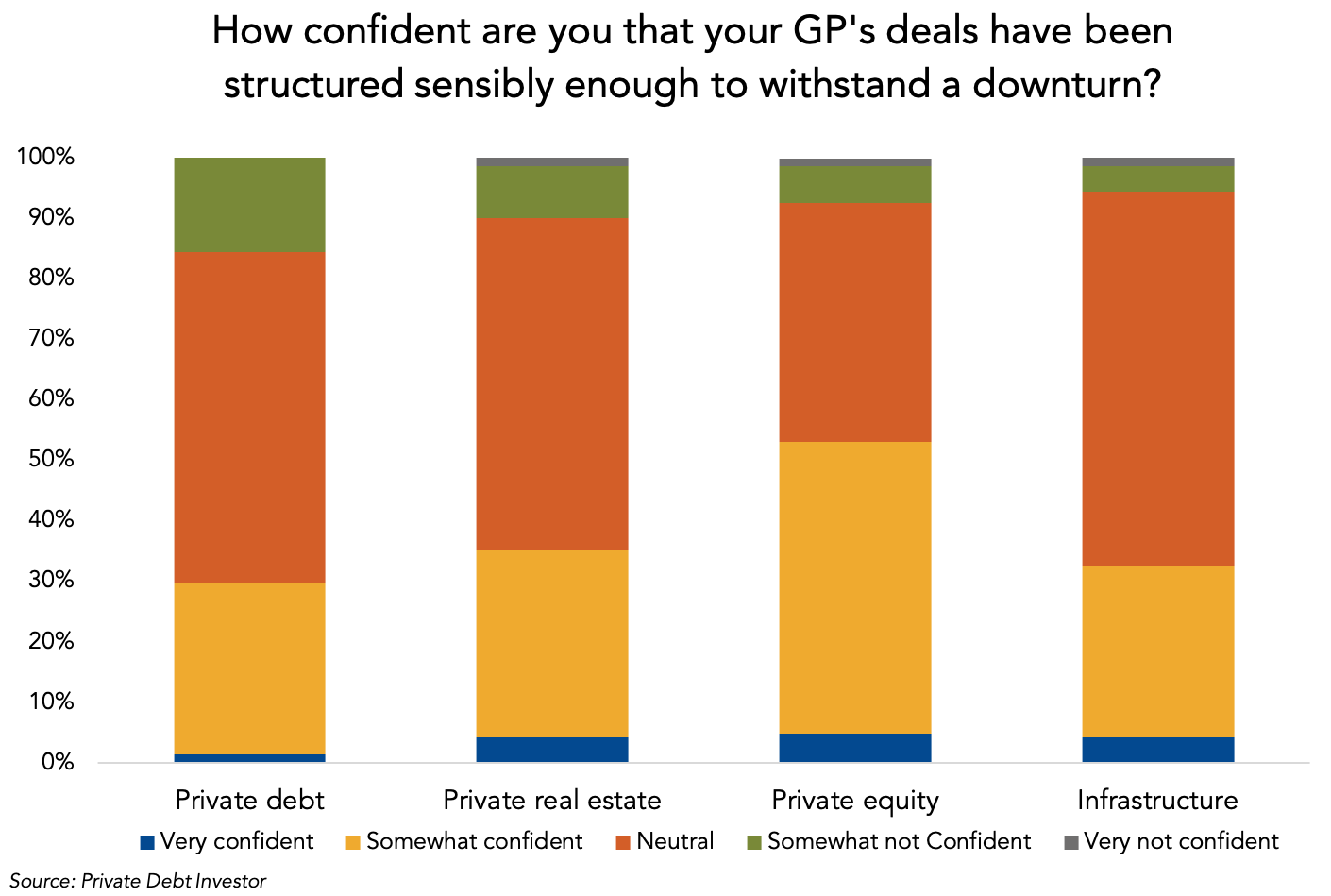
In our PEI Perspectives 2019 survey, in which we polled limited partners that invest in private markets, our respondents noted the most scepticism about GP deal structuring for the private debt asset class compared to private equity, infrastructure and real estate.
The precise question – “How confident are you that your GPs’ deals have been structured sensibly enough to withstand a downturn?” – broke responses down ranging from LPs feeling “very confident” to “very not confident” in the way GPs structure.
While no one responded that they were very not confident, 15.5 percent of investors expressed some scepticism around the way private debt managers are putting together their deals.
With many investors making their first commitments to the asset class in this credit cycle, how their portfolio fares in the downturn may well affect their allocation to the private debt class in five, seven or 10 years.
Of course, first and foremost, credit managers have a duty to not only preserve their investors’ capital, but also to deliver solid risk-adjusted returns, in which deal structure is of course integral. By extension though, credit managers are shaping the future of the asset class.
Private credit hasn’t gone through a cycle in quite the way that private equity or real estate went through the global financial crisis. Both were well-established, or at least relatively well-established, alternative asset classes that had institutional investor backing.
Many investors will cut their teeth on private credit for the first time this credit cycle, and let’s hope they want to come back for more.




Latest news
Q2'26 BDC analysis shows additional 184 bps of nonaccruals at cost
In a universe of 173 business development companies, or BDCs, Octus identified a total of $9.5 billion of debt (at cost) in nonaccrual status reported in the second quarter of 2026, a slight decline of 5% from $10 billion in the first quarter of 2026.

Reading the Board
The story changes depending on which numbers you’re counting.
Private Credit Defaults 101: Different Numbers, Different Stories
In Season 2 of Billions, Bobby Axelrod takes his lawyer Orrin Bach to an empty Yonkers racetrack in the dead of night.