



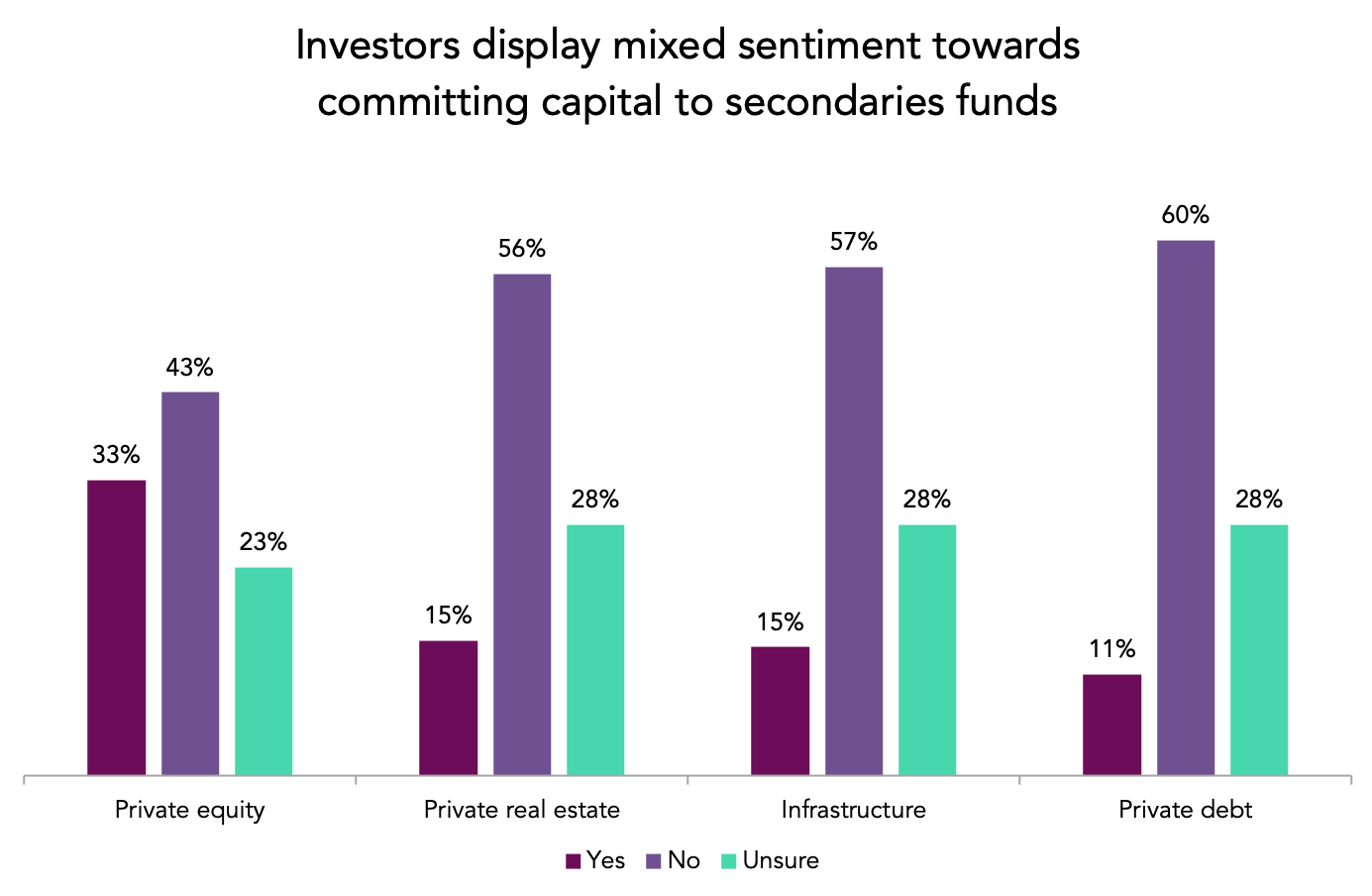
Now a well-established part of the private equity universe, secondaries remain very much on the periphery of the private debt world. This seemed to be confirmed by Private Debt Investor’s recent LP Perspectives 2020 survey, which found that only 11 percent of investors who took part were planning to commit to private debt secondaries funds over the next year, compared with 60 percent who were not. The equivalent respective figures for private equity secondaries funds were a much closer 33 percent and 43 percent.
On the other hand, a more positive note appeared to be struck by the Full-Year 2019 Volume Report produced by Setter Capital, the Toronto-based investment bank focused mainly on the private equity secondaries market. It found that private debt secondaries volume increased 104.8 percent last year to $3.14 billion, from $1.5 billion in 2018.
However, there may not be much of a contradiction between the two survey findings. Despite the impressive jump in activity recorded by Setter, the private debt secondaries market remains unquestionably small. By way of comparison, the private equity secondaries market – which includes debt funds in its total – posted overall volume last year of almost $78 billion.
It is not surprising, therefore, that our survey found private debt secondaries were not part of many LPs’ plans. Private debt is a relatively immature asset class, having only really developed momentum since the global financial crisis. Therefore, there simply hasn’t been enough capital raised and invested for the private debt secondaries market to have gained critical mass.
However, as Setter shows, it’s a market that is now beginning to get off the ground. “Private debt secondaries is on a natural trajectory,” says Ebou Jallow, a vice president at Setter. “There are more buyers entering the space and they are increasing the scope of funds they’ll look at from senior secured to further up the risk curve, including special situations and distressed.”



Latest news

European mid-market direct lending margins face steady compression since 2024
European mid-market direct lending margins have seen consistent compression over recent years but recorded a slight increase in the second quarter of 2026…

US leveraged loan issuance rebounds in September
Following three consecutive months of declining issuance, the US leveraged loan market has reversed course in September. Approximately $48.7b of…

Reversion to the Mean
Climbing toward the average is a very different story than surpassing it.