



Positioned in between senior debt and equity, subordinated debt providers are catching the attention of investors.
As the world enters a new economic era, firms need new financing options to help them grow in a more challenging environment. Increasingly, hybrid debt/equity and subordinated debt are being used by corporates which want to expand their business but for which neither senior debt nor private equity can offer a solution.
Business valuations have dropped substantially since the pre-covid era and this may lead many business owners to feel they are getting a bad deal when they bring in an equity investor, such as a private equity fund, to support their business’s growth.
Instead, hybrid debt and equity providers can take an approach more akin to providing a senior loan where the exact value of the business shouldn’t matter provided the overall leverage level is acceptable and the business is generating enough cashflow to service its debt. They can also offer additional flexibility to borrower businesses, such as the ability to buy off the equity kicker over time. It is this type of flexibility in a market environment which has become highly volatile that is driving many firms to seek out new solutions to their financing needs.
When compared to direct lending, flexibility is a key feature of hybrid and subordinated offerings that is not always so present in conventional unitranche or senior loan structures. While private debt funds have prided themselves on being more open to finding solutions for businesses than banks, many require a financial sponsor as part of a deal, which may not be attractive to business owners looking to preserve their equity stakes. Equity kickers and warrants can also create greater alignment between entrepreneurs and lenders, some believe.
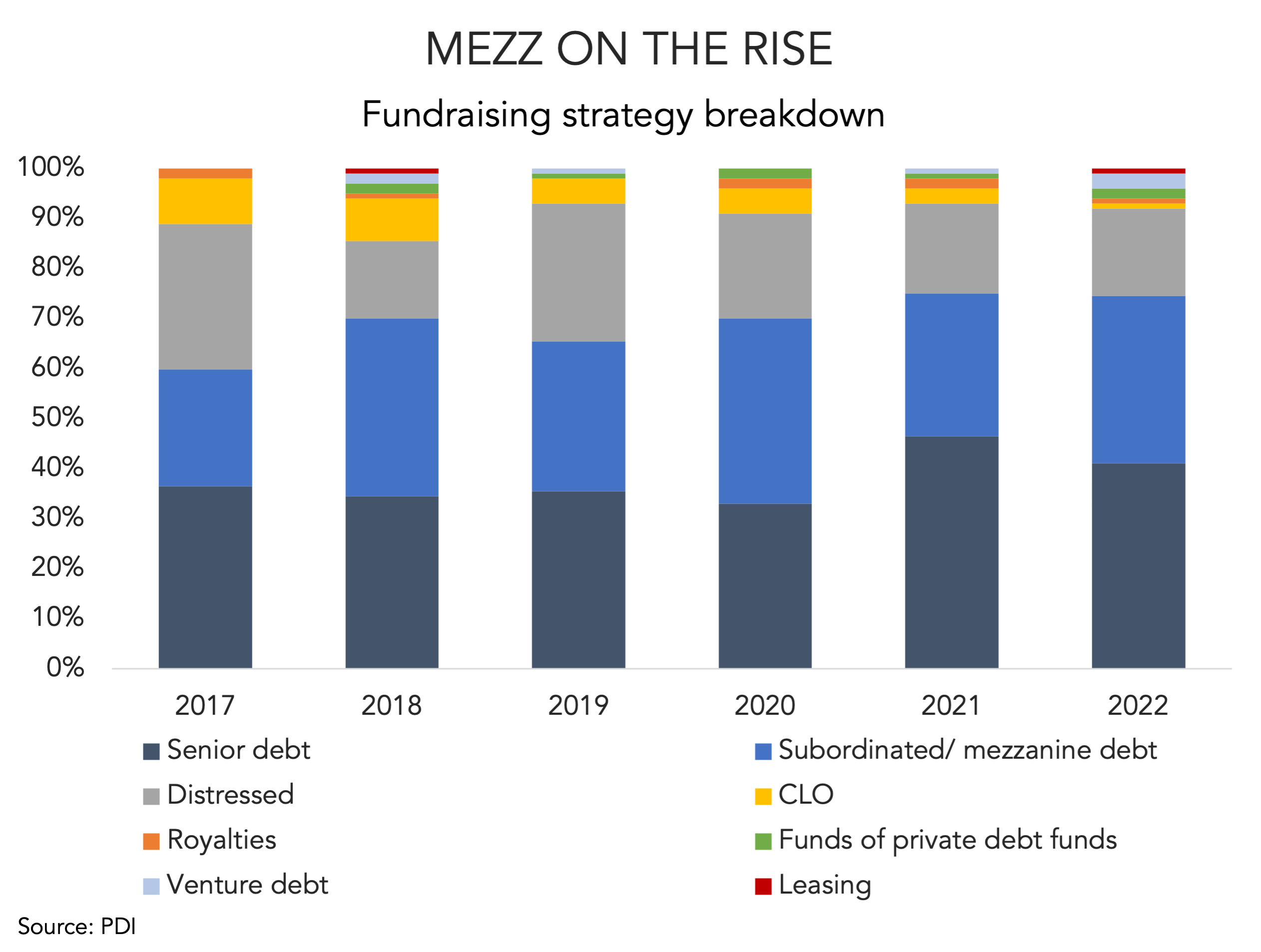
For LPs, these strategies can offer differentiation within their fixed income and alternatives portfolios but have other advantages over more traditional direct lending strategies. According to fundraising research by Private Debt Investor, the overall proportion of capital raised for mezzanine, subordinated and preferred equity strategies made up a third of all capital raised in 2022, well up from 29 percent in 2021 – though it comes at a time when overall fundraising in private credit has fallen (see chart).
(Past performance is no guarantee of future results.)



Latest news

With inflation running hot, rate hike expectations strengthen
A hotter-than-expected inflation reading has renewed expectations for near-term Federal Reserve tightening. The Consumer Price Index rose 0.6% month-over-month, pushing…

Open Tab
Leveraged loans keep running up a tab. Senior direct lending already knows what it owes.
