



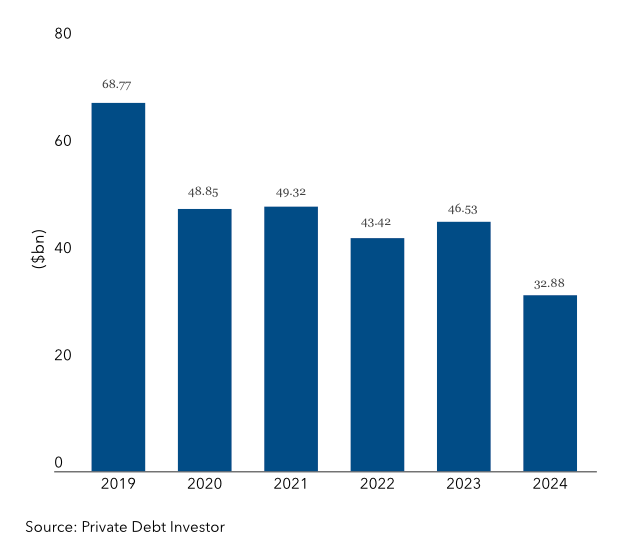
Distressed debt has adapted to more benign market conditions but may revert to a ‘pure’ form as pressure on borrowers grows.
Distressed debt isn’t what it used to be. In the wake of the global financial crisis, there was a once-in-a-lifetime chance to invest in rebuilding a global economy that was in tatters. That was a genuine “pure distress” opportunity which made fortunes for some but may have burnt others.
Since then, market conditions have been occasionally volatile but never coming close to a repeat of what happened in 2008/09. In the wake of the covid pandemic, some fund managers raised dislocation funds – some of these vehicles were closed in a matter of weeks – to take advantage of what ultimately proved to be a short-lived crisis.
Overall, economic conditions over the last couple of decades have been broadly benign. But even with a tranquil economic backdrop, there will always be companies in need of complex financing that they may not be able to obtain from ‘plain vanilla’ providers. And this is why a host of labels have become increasingly familiar over the years: special situations, opportunistic credit, capital solutions…the list goes on.
As can be seen from the chart above, distressed debt fundraising sunk to a new low last year. But it’s possible that 2025 may see something of a revival as investors take note of a changed economic and geopolitical backdrop in which stubbornly high interest rates and a likely revival of inflationary pressures will keep borrowers under pressure.
Certainly, distressed/opportunistic fundraising got off to a flying start with Oaktree Capital Management closing a $16 billion vehicle in February. It’s a part of the private credit market that may just be in line for something of a revival.



Latest news

US Leveraged Loans Return 3.36% to Investors YTD
The Bloomberg US Leveraged Loan Index (Ticker: LOAN) returned 0.96% in August and has gained an additional 0.28% through September…

PE dry powder
The capital that is being raised is flowing overwhelmingly to the largest, most established managers.

Middle market debt held by BDCs vs High yield vs Treasury yields
The blue line represents the current dividend yield of the VanEck BDC Income ETF (BIZD), which stood at 11.7% as…