



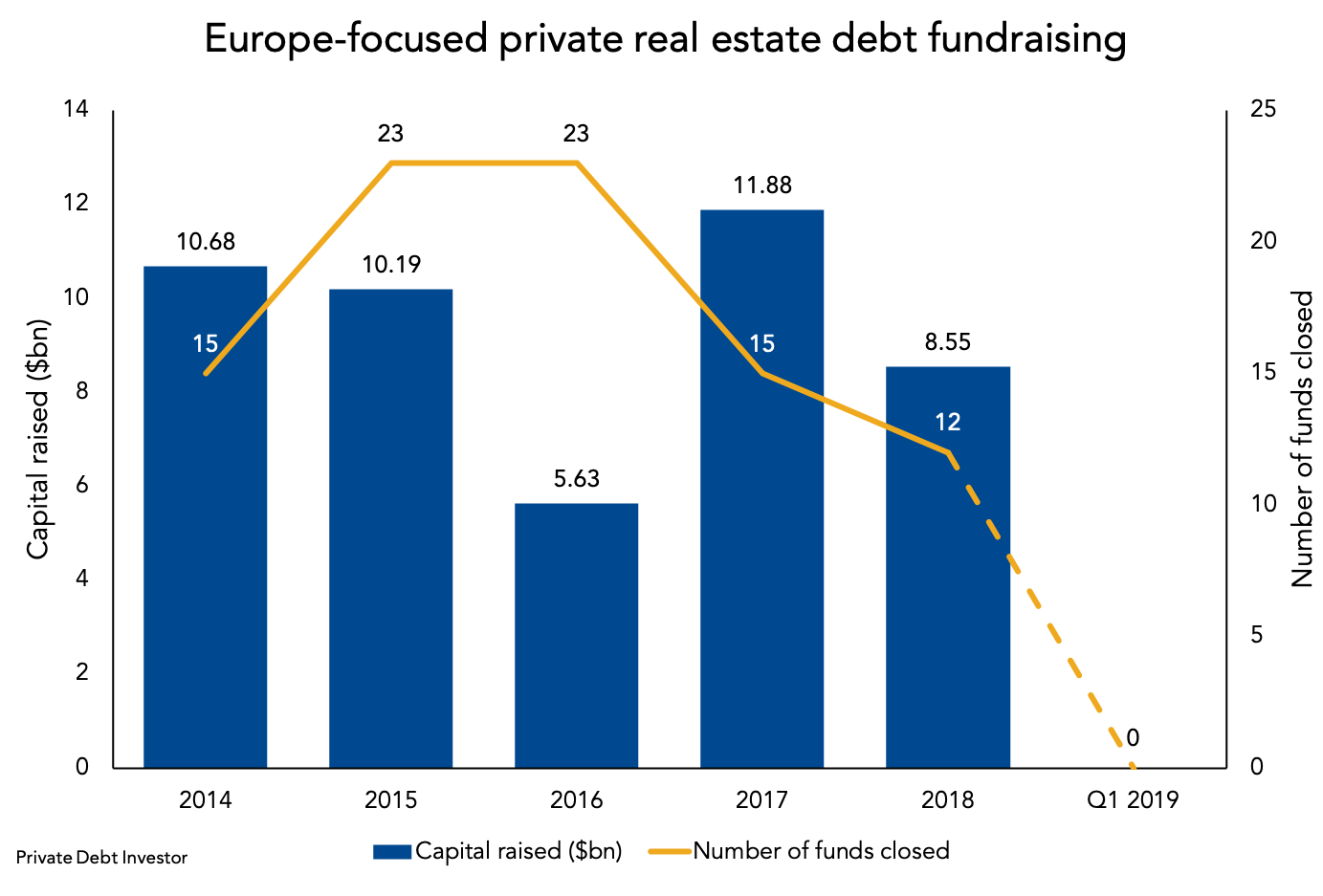
Investor enthusiasm appears to be waning as Brexit worries cast a cloud over the sector.
Capital allocated to funds with a focus on European real estate debt reached a record level of almost $12 billion in 2017, according to PDI data. Compared to this, last year’s tally of around $8.5 billion came as a bit of an anti-climax.
It should be noted that the annual totals for this strategy show a lot of deviation from one year to the next, so it should not be assumed that 2019 will show a further decline. However, there are signs that equity investors are withdrawing from Europe’s largest real estate debt market – the UK – as Brexit uncertainty bites. And, where equity investors have led, debt investors have generally followed.
The UK does look like a less reliable investment destination these days. Not only is that down to the protracted negotiations that have followed the fateful referendum outcome in 2016, but also fear of what may be coming around the corner – specifically, a general election and the concern that victory for the left-wing Labour party opposition may lead to increased taxes on real estate.
The logical solution might be to allocate relatively more capital to other parts of Europe. In reality, though, this is not easy. In Germany, regarded as Europe’s powerhouse economy, competition is intense and returns typically low in a country where the banks still wield considerable influence. Recent research from PDI has, however, revealed perceived gaps for debt funds in certain sectors in mainland Europe – care homes, student accommodation and storage facilities being among the areas named.
Keeping those dollars and euros flowing into Europe’s real estate debt markets may just take a bit more imagination, and possibly a bit more risk.



Latest news

European mid-market direct lending margins face steady compression since 2024
European mid-market direct lending margins have seen consistent compression over recent years but recorded a slight increase in the second quarter of 2026…

US leveraged loan issuance rebounds in September
Following three consecutive months of declining issuance, the US leveraged loan market has reversed course in September. Approximately $48.7b of…

Reversion to the Mean
Climbing toward the average is a very different story than surpassing it.