



The biggest challenge for such shops will be where to find chances to deploy capital should no extended period of topsy-turvy markets ensue.
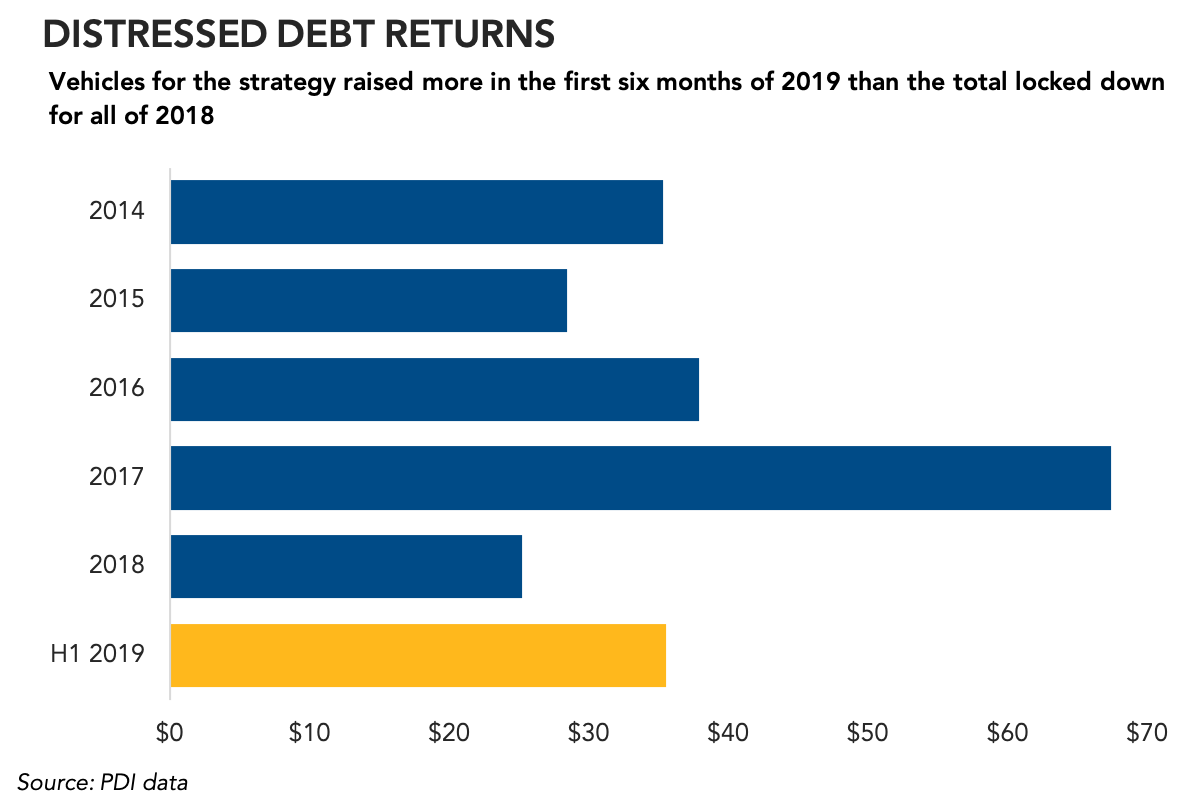
Distressed debt fundraising has come back in a big way in the first half of the year, according to Private Debt Investor’s fundraising data.
In that time period, distressed vehicles collected almost $36 billion. This exceeds the more than $25 billion such funds collected all of last year. It’s a significant turnabout for a strategy that many investors have been skeptical of – or at least until lately.
In PDI’s July magazine cover story, “Why the wheels have fallen off distressed”, we talked with a multitude of people – including the godfather of distressed debt investing himself, Howard Marks – many of whom reached a similar conclusion: distressed debt has a time and place, but it’s not now. And even when that time comes, the results can be very specific to manager and fund vintage year.
The biggest concern for many investors has been the lack of opportunities in the distressed market, and many expected a larger dislocation after 2018’s fourth-quarter volatility. Though that has more than abated, investors have still lined up behind distressed debt; it should be noted that our definition of “distressed” also encapsulates special situations vehicles.
If the good times continue to roll, the question then arises, where do managers put all this money? The answer may lie in more idiosyncratic situations, particularly involving mid-market companies that can be more prone to financial distress outside of an economic cycle than larger companies.



Latest news

European mid-market direct lending margins face steady compression since 2024
European mid-market direct lending margins have seen consistent compression over recent years but recorded a slight increase in the second quarter of 2026…

US leveraged loan issuance rebounds in September
Following three consecutive months of declining issuance, the US leveraged loan market has reversed course in September. Approximately $48.7b of…

Reversion to the Mean
Climbing toward the average is a very different story than surpassing it.