
Will investor worries about a recession’s impact on private credit come true?
We asked this question at the end of last week’s installment in our special series on the “new” post-COVID private credit. With all the distractions related to the side-effects of the coronavirus on the economy and our daily lives, it’s a challenge to remember that US GDP dropped 33% in the second quarter – the sharpest decline in history.
What seems also clear, though, is that the third quarter is poised for one of the biggest economic rebounds, with estimates around 30%, depending on the impact of the various stimulus programs that have (or have not) been put in place.
If that trend holds, and if there’s no second virus waves (two big “ifs”), the 2020 downturn may not even qualify technically as a recession. Nevertheless businesses will remain in either “have” or “have-not” status for the foreseeable future. COVID-sensitive sectors are not expected to recover anytime soon, while more B2B-focused businesses have been recovering for months.
That means the usual investor worries associated with economic pullbacks should be limited in scope and period. Per our Chart of the Week (courtesy Refinitiv LPC) about a third of direct lenders reported more than 20% of their portfolio names were watch-listed at June 30. That share should be cut in half by the end of 2020.
Covenant defaults, for example, have largely been mitigated in the middle market by sponsor equity cures and lender liquidity support. This will likely be reflected in higher recoveries and lower losses down the road, as enterprise values (driven by improved cash flows) are repaired and enhanced.
For consumer-facing borrowers, especially those in the retail, travel, restaurant, and hospitality sectors, already weak financing structures (too much leverage or diminished collateral) may not improve anytime soon. In those situations, investors hope for second ways out via refinancings from distressed lenders.
What about compression of yields? As we’ve detailed in previous columns, leverage and pricing is driven by competition among direct lenders. With only one quarter left in the year, a sprint to print is well underway. For the best credits, we anticipate Libor spreads to begin approaching pre-COVID levels.
The good news for investors is that market volatility will only increase as political uncertainty grows. Inconclusive or contested election results are bound to weigh on public valuations and prices, which tend to leak over into private markets.
As year-end and colder weather approach the odds of a second COVID-19 wave also rise. That could reverse what appears to be a modest bull market in private credit issuance.
➢ Next week: We wrap up our special series with the outlook for private credit in 2021


Latest news
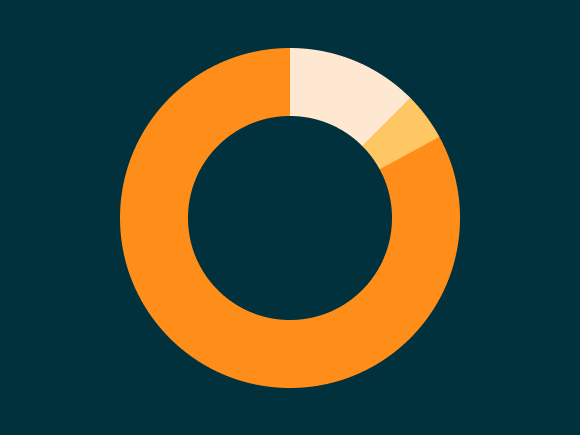
Top 50 BDCs Accounted for 75% of Nonaccrual Loan Cost in Q2’26
The 50 largest BDCs, on the basis of total debt investments as of the second quarter of 2026, accounted for 75% of the total aggregate reported value of nonaccrual debt at cost and fair value.

US private debt AUM ($B) by channel
In 2025 and the early part of 2026, the retail channel added AUM to the asset class at a much faster rate than institutional investors in both regions, with growth rates of 43.7% globally, 41.4% in the US, and 73. 1% in Europe through the beginning of 2026 compared with year-end 2024 figures.