Private Debt Intelligence – 9/2/2019

Enthusiasm for alternatives remain among investors
Chart
Download Data
[wpdm_package id=’27878′]
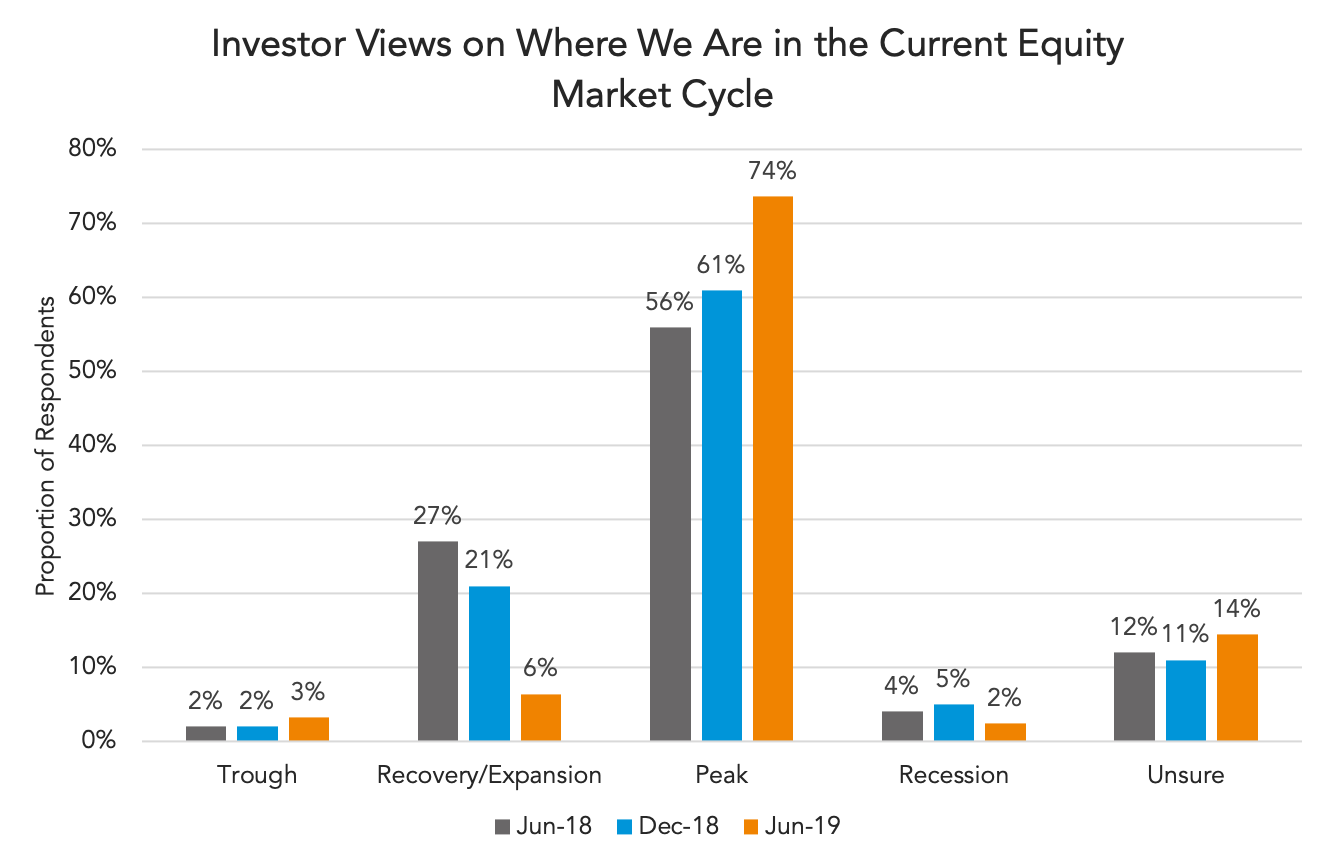
Based on the results of the last survey of 177 institutional investors conducted in July 2019 by Preqin, we find out that investors remain upbeat about the future performance of alternatives but are aware this may not continue. Seventy-four percent of investors think that equity markets are at a peak, up from 61% that said the same at the end of 2018.
A market correction is foreseen, but this is not prompting a change in investor attitudes to private capital – nearly two-thirds (64%) say their allocation plans are unchanged due to the market cycle. Performance has satisfied most investors across private equity, private debt, and infrastructure – asset classes that have held up well against global market uncertainty.
Private equity and private debt are looking particularly favourable, with more than 80% of investors in each asset class intending to increase their capital commitments to these asset classes than decrease them over the coming year. Real estate investors are the ones having more concerns over their future performance and may be taking a more cautious approach to new investments over the next 12 months. Investors in hedge funds, though, are turning to the asset class’ defensive properties as their concerns around a correction grow: 64% of hedge fund investors are looking to position themselves more defensively as a result.
The important question for investors is when – and how – they can weather a market correction and, as we can see in the report, alternative assets will be key for many.
Contact: Maria Zapata
maria.zapata@preqin.com



Latest news

Top 50 BDCs Accounted for 75% of Nonaccrual Loan Cost in Q2’26
The 50 largest BDCs, on the basis of total debt investments as of the second quarter of 2026, accounted for 75% of the total aggregate reported value of nonaccrual debt at cost and fair value.

US private debt AUM ($B) by channel
In 2025 and the early part of 2026, the retail channel added AUM to the asset class at a much faster rate than institutional investors in both regions, with growth rates of 43.7% globally, 41.4% in the US, and 73. 1% in Europe through the beginning of 2026 compared with year-end 2024 figures.