



Some LPs still keen on co-investment
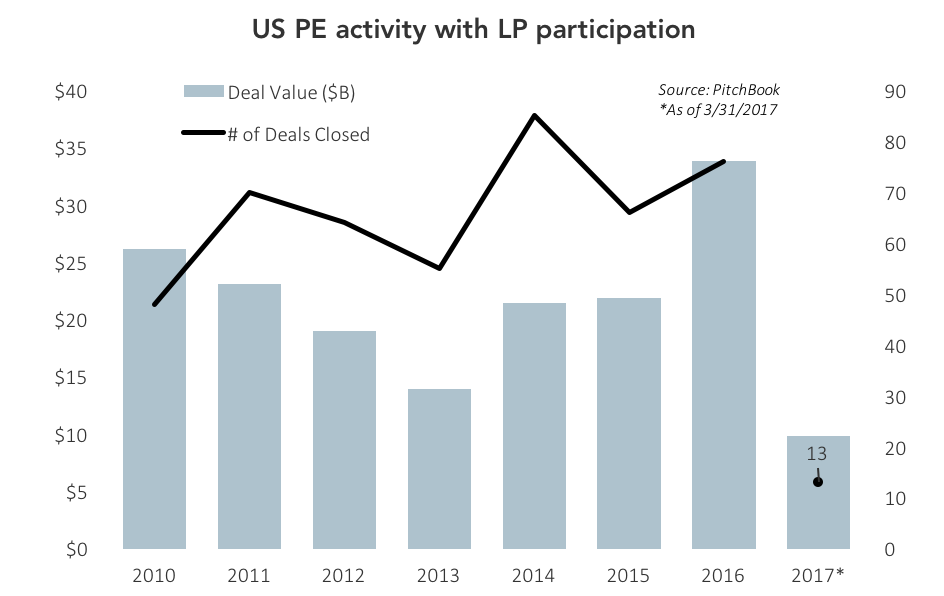
In 2016, limited partners participated in no fewer than 76 US private equity transactions, the cumulative value of which hit no less than $33.8 billion, more than any other year in the past decade excepting 2007. Moreover, 2017 is off to a strong start in terms of value at least, with $9.8 billion tallied thus far across a slower-paced 13 deals. The steady upward trend since 2010 is unmistakable if volatile, however, testifying to not only the growing popularity of co-investment among LPs but also the ramping up of those institutions already experienced with such strategies. This is not necessarily news – many have pointed out over the past few years the attraction of avoiding fees and increasing rewards directly reaped from investment, while also acknowledging that it is no small task to build up an in-house team capable of handling direct investments a la general partners. Acquiring such capabilities is time-consuming, expensive and inherently riskier, in the end. It consequently won’t end up being a choice for many LPs – nor is it likely their best option – but shall remain more the domain of those firms that are already either well-versed in employing direct investing strategies, such as Canada Pension Plan Investment Board and Ontario Teachers’ Pension Plan. That said, there could be a slight increase in the ranks of LPs that try to get the best of both worlds and subscribe on to funds that allow for the possibility of co-investment through sidecar pools of capital or other means.


Latest news

Behind the Scenes
Climbing toward the average is a very different story than surpassing it.

European mid-market direct lending margins face steady compression since 2024
European mid-market direct lending margins have seen consistent compression over recent years but recorded a slight increase in the second quarter of 2026…
Private Credit Defaults 101: Now Streaming
Every big theatrical release eventually makes its way to streaming. It gives people who missed it in theaters a chance to catch up, and lets those who saw it go back for a second look at what they missed the first time.