



View PitchBook’s 2017 PE & VC Fundraising Report Here
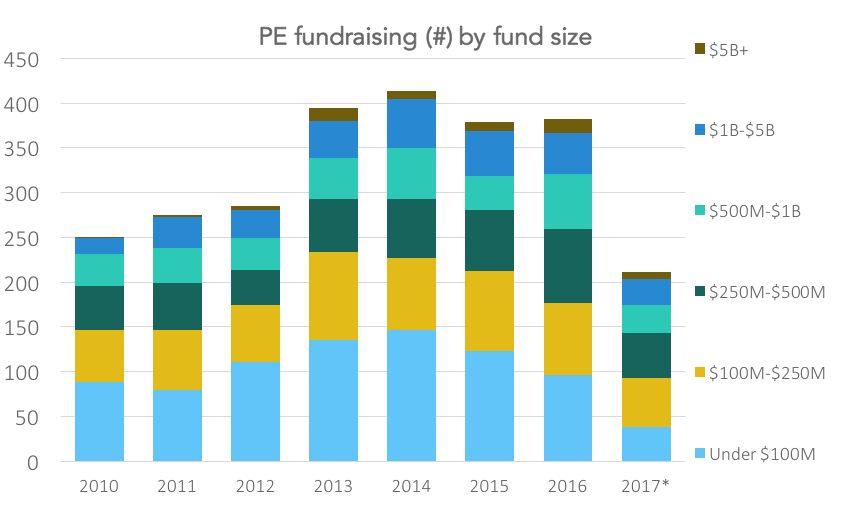
If the latest fundraising numbers are any indication, the new buyout cycle taking hold will be much more geared toward the middle market, particularly on the lower end. Compared to years past, the latest crop of MM funds accounts for a larger percentage of fund closings by count. Through August 1, funds in the $100M-$500M range made up almost half (49.7%) of all 2017 fund closings—only a few years ago that percentage was closer to a third (35% in 2014) by count. The headlines will always pay more attention to the largest PE funds, which account for an unusual 50% of total capital raised this year, but there seems to be a big shift in LP interest behind the scenes.
Aside from PitchBook’s numbers, an investor survey done by Probitas Partners, a placement agent, found very positive sentiment toward US middle-market funds. Asked which sectors or strategies in the middle market were most appealing, 81% of respondents cited funds focused on operational improvements (up from 61% last year). Another 73% cited middle-market funds focused on buy and build strategies, while 51% said funds focused on single industries were attractive. Those cues shed light on the increasing number of MM funds this year relative to the overall PE market and particularly at the upper end, where LP investment opportunities are limited. As the newest buyout cycle begins in earnest, it appears the next five to seven years will see an even more pronounced shift toward the middle market, even if mega deals steal the headlines.
Contact: Alex Lykken
alex.lykken@pitchbook.com



Latest news

Behind the Scenes
Climbing toward the average is a very different story than surpassing it.

European mid-market direct lending margins face steady compression since 2024
European mid-market direct lending margins have seen consistent compression over recent years but recorded a slight increase in the second quarter of 2026…
Private Credit Defaults 101: Now Streaming
Every big theatrical release eventually makes its way to streaming. It gives people who missed it in theaters a chance to catch up, and lets those who saw it go back for a second look at what they missed the first time.