
“The easy money has been made; the harder money is left.”
We noted this recently from an experienced asset manager reflecting on the current investing market. It’s fairly typical of a public trading approach emerging from a period of low prices. Eventually the worry discount goes away as fear fades. Finding the next bargain then becomes a challenge.
So where’s the value in private credit to be found? As the Great Moderation in the economy, rates, and inflation ends and we enter a new era – the Great Unwind – of higher volatility, higher rates, and reduced globalization, how will that impact less liquid assets?
As our Chart of the Week shows, the thirty-year-plus cycle of decreasing interest rates is over. The bond market may see moments of revival, as it is doing today in the face of better economic news, but hard to imagine a repeat of the heyday it enjoyed since Paul Volcker wrung double-digit inflation out of the US economy in the early 1980’s.
Of course, fixed income plays an important role in well-diversified portfolios. Indeed, the current market demonstrates how there’s rarely a straight line up or down for rates. But experienced institutional investors now understand how less correlated assets, including private equity and private credit, real estate and other alternatives, help ease the volatility of headline risks.
We’ve seen how today’s bronco-busting inflation vs. recession gyrations have wreaked havoc with the relative value between liquid and illiquid credit. But repair is in the air. Investors hope July’s lower CPI number marks the high point of inflation and the prospect of a dovish Fed by the 4Q. BSL prices appear to have bottomed and yields peaked for this cycle.
The outlook for credit then depends on the risk environment. Will the fourth quarter and 2023 bring a soft landing of sorts, a mix of zero and slow growth quarters as well as small troughs? Will consumer spending dive to match gloomy consumer sentiment? Do pessimistic business surveys, weighed down by continued supply chain issues, forecast further production slumps?
These questions all point to the importance of portfolio construction. Less-cyclical companies will fare better if the current precession worsens, and will continue to thrive in an “ok, not great” economy. Businesses with high free-cash flow characteristics can manage better through bouts of higher interest expense than capex-heavy ones.
If the Fed succeeds in taking the edge off the worst inflation, it will likely slow the pace of hikes later in the year. That positions early 2023 to be a transitional period before whatever economic cycle lies ahead, whether that’s renewed expansion or sloppy sideways.
There’s no easy money in private credit. Its value resides in performance relative to other asset classes and compared to the risk-free rate. It’s up to experienced managers to structure each transaction with the right terms – leverage, yield, and covenants – to reward and protect investors.


Latest news
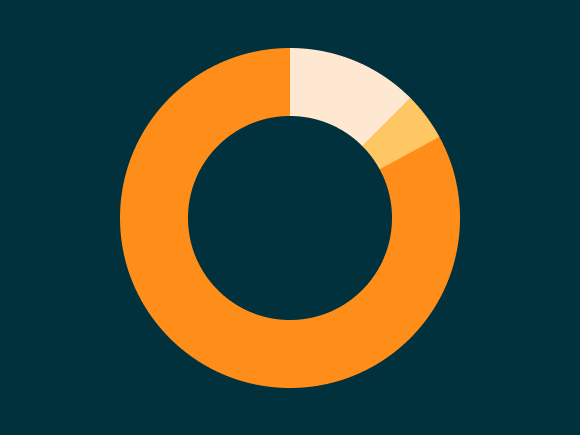
Top 50 BDCs Accounted for 75% of Nonaccrual Loan Cost in Q2’26
The 50 largest BDCs, on the basis of total debt investments as of the second quarter of 2026, accounted for 75% of the total aggregate reported value of nonaccrual debt at cost and fair value.

US private debt AUM ($B) by channel
In 2025 and the early part of 2026, the retail channel added AUM to the asset class at a much faster rate than institutional investors in both regions, with growth rates of 43.7% globally, 41.4% in the US, and 73. 1% in Europe through the beginning of 2026 compared with year-end 2024 figures.