
Download PitchBook’s Report here.
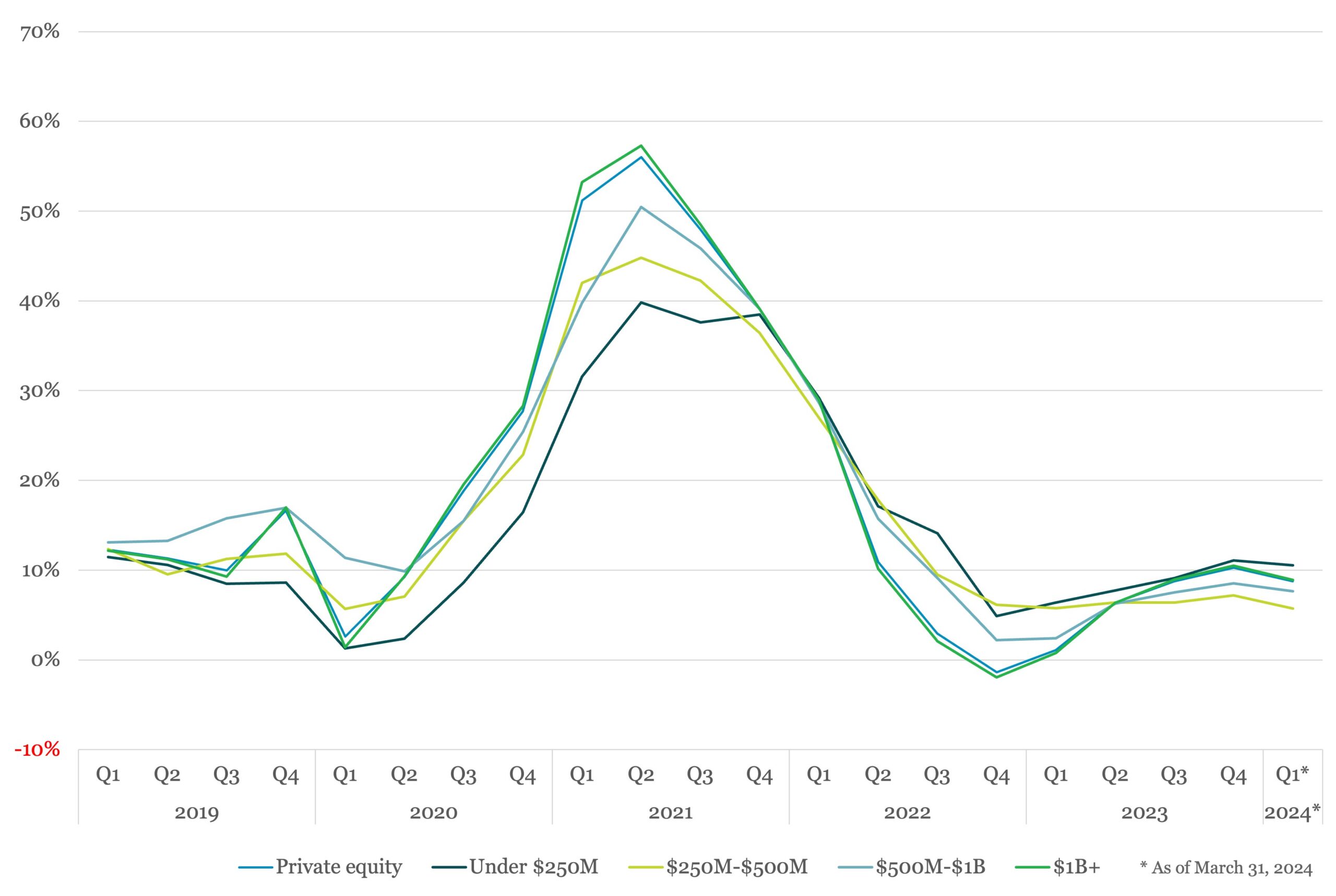
The one-year IRR decreased back to single digits in Q1 2024, coming in at 8.7% for the asset class globally, well below its 14.2% average since 2009. Higher-for-longer interest rates have put pressure on fund returns in the latest monetary tightening cycle as the “golden era” of PE returns is fading.Looking at the various size buckets, we note that the one-year IRR of 5.7% for funds in the $250 million to $500 million range is at its lowest since 2009 (barring the COVID-19-affected quarter of Q1 2020, which was also 5.7%), with the IRR showing the largest sequential decline of any size bucket. The under $250 million funds remained the most resilient, posting double-digit returns for the second consecutive quarter, although we do caveat that this size bucket is subject to selection and survivorship biases. Megafunds outperformed middle-market funds for the third consecutive quarter, this time by 230 basis points. We note that megafunds’ tendency to use high levels of leverage can magnify returns in both good and bad times, exhibiting higher performance volatility than middle market funds.
(Past performance is no guarantee of future results.)


Latest news
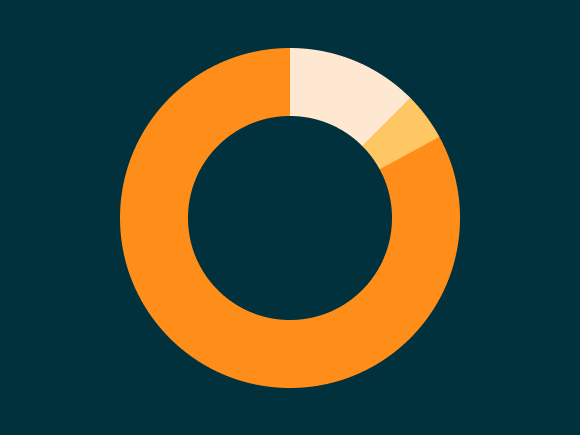
Top 50 BDCs Accounted for 75% of Nonaccrual Loan Cost in Q2’26
The 50 largest BDCs, on the basis of total debt investments as of the second quarter of 2026, accounted for 75% of the total aggregate reported value of nonaccrual debt at cost and fair value.

US private debt AUM ($B) by channel
In 2025 and the early part of 2026, the retail channel added AUM to the asset class at a much faster rate than institutional investors in both regions, with growth rates of 43.7% globally, 41.4% in the US, and 73. 1% in Europe through the beginning of 2026 compared with year-end 2024 figures.