
Say what you will about last year’s Covid-induced downturn in the US beginning in March. But it paled in comparison to the UK’s economic cratering. Not since the Great Frost of 1709 had that proud nation suffered such a dramatic slump. Europe, in various degrees, followed suit.
But then, like the US, Europe and the UK began to recover. Indeed, a quick review of the literature showed how similar the comebacks were. This was particularly true of the credit markets: from the initial panicky revolver draw-downs, to separating “have” borrowers from “have-nots,” to the commercial upswing and deal snap back in the fall, and the wild Big Bang of closings at year-end.
Yet we detected distinct differences as well. As our 2016 white paper entitled “A Review of European Direct Lending” highlighted, European leveraged lending has historically been dominated by the commercial banks. In part this was due to the nationalistic character of its banking system, drawing strong support by local community banks for middle market businesses.
But as was the case in the US, direct lending blossomed in Europe after the GFC as regulated lenders were discouraged from holding leveraged loans. That gave rise to a slew of direct lenders – Arcmont, Hayfin, Permira, and Tikehau, to name a few – who each built pan-European teams to source deals from private equity firms.
As we discussed five years ago, though, not all countries are created equally. Besides cultural “wine-drinking vs. beer-drinking” variations, there are significant differences among legal jurisdictions. Even filing for security interests in certain geographies can be a challenge. And of course having regional offices is critical to establish relationships with key deal referral sources.
Somewhat presciently, we ended our thought piece back then by quoting one pan-European lender who told us: “Country-specific funds are compelled to follow the credit cycle of that country.” To avoid that trap you, he said, you need to toggle among economies you favor. Looking back through the lens of Covid, that would have been a challenge, as all nations’ economies sank in sync.
Another lender predicted: “There will be a shake-out of direct lenders down the road. The US experienced this is 2009 as poorly performing (or inadequately funded) managers flushed away in the downturn. For Europe, the day of reckoning may still be ahead.”
So how did the roll-out of the non-banks go after we published that article? And what has been the impact of Covid on direct lending in general?
Over the next several weeks we’ll examine the state of private credit in Europe as the pandemic specter slowly recedes. We’ll also take a look at the financing terms being offered by credit managers, and how they compare to those being offered by banks.
In addition we’ll cover the relative differences between leveraged lending in Europe and the US. Finally, we’ll explore the dynamics of European fundraising, not just for private credit as a whole, but for separate strategies such as mezzanine, special situations, and distressed.


Latest news
Top 50 BDCs Accounted for 75% of Nonaccrual Loan Cost in Q2’26
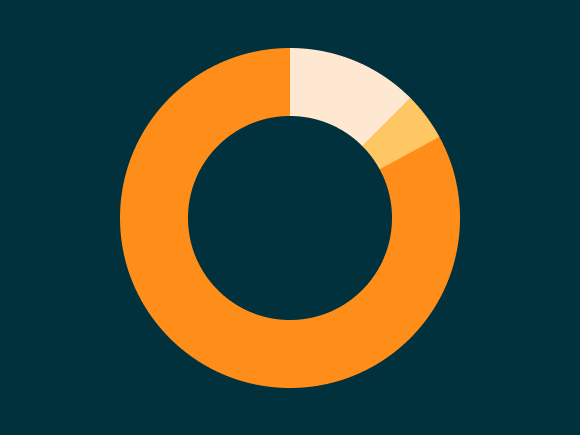
The 50 largest BDCs, on the basis of total debt investments as of the second quarter of 2026, accounted for 75% of the total aggregate reported value of nonaccrual debt at cost and fair value.

US private debt AUM ($B) by channel
In 2025 and the early part of 2026, the retail channel added AUM to the asset class at a much faster rate than institutional investors in both regions, with growth rates of 43.7% globally, 41.4% in the US, and 73. 1% in Europe through the beginning of 2026 compared with year-end 2024 figures.