


Lender Survey: Are the structural characteristics of loans changing for good?

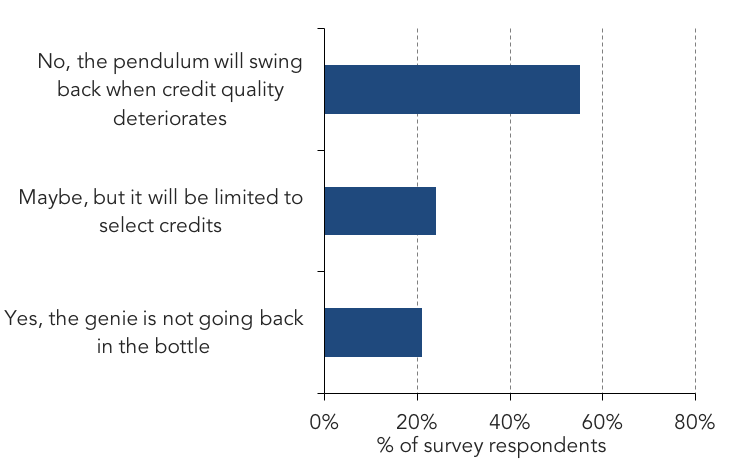
Just over half of the audience gathered during Thomson Reuters LPC’s 23rd Annual Loan & CLO Conference said that structures have not changed for good but rather the pendulum will swing back when credit quality deteriorates. However, just over one fifth disagreed, reporting that the genie is not going back in the bottle and once heavily negotiated docs will not be easy to change. Meanwhile, 24% said that structures will continue to be favorable for issuers but select high quality, lower risk credits. With increased optionality in credit agreements, sponsors can pursue a number of avenues and have increased flexibility in case of a credit going through some bumps. For new deals, investors generally have a wish list for rolling back structural deterioration with, not surprising, bringing back covenants with clean historical EBITDA definition meaning capped add-backs and no inclusion of projected results or cost savings at the top of the list. Although a lower spread impacts the immediate economics of a deal, erosion in structures has the potential to affect loss and recovery and conference attendees expect that recoveries may be lower in the next downturn. Looking ahead, some arrangers comment that when there is more supply for investors or if there is a bumpy period of broader market volatility, investors will have more room to push back on recent loosening.
Contact: Ioana Barza
ioana.barza@thomsonreuters.com



Latest news

US Leveraged Loans Return 3.36% to Investors YTD
The Bloomberg US Leveraged Loan Index (Ticker: LOAN) returned 0.96% in August and has gained an additional 0.28% through September…

PE dry powder
The capital that is being raised is flowing overwhelmingly to the largest, most established managers.

Middle market debt held by BDCs vs High yield vs Treasury yields
The blue line represents the current dividend yield of the VanEck BDC Income ETF (BIZD), which stood at 11.7% as…